The dry process is one of the most widely used post-harvest methods in Brazil. This technique produces the famous coffee we know as “natural.” This name reflects the essence of the technique: it is the method that causes the least interference with the physical structure of the fruit, preserving its integrity and, consequently, maximizing the retention of the beverage’s sensory potential and natural sweetness.
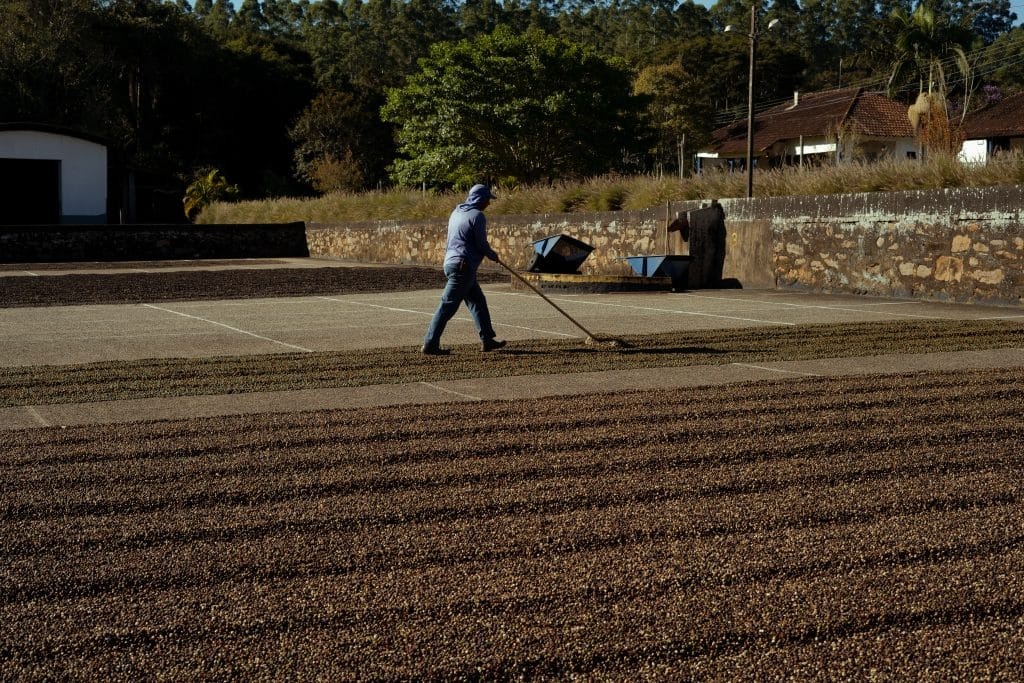
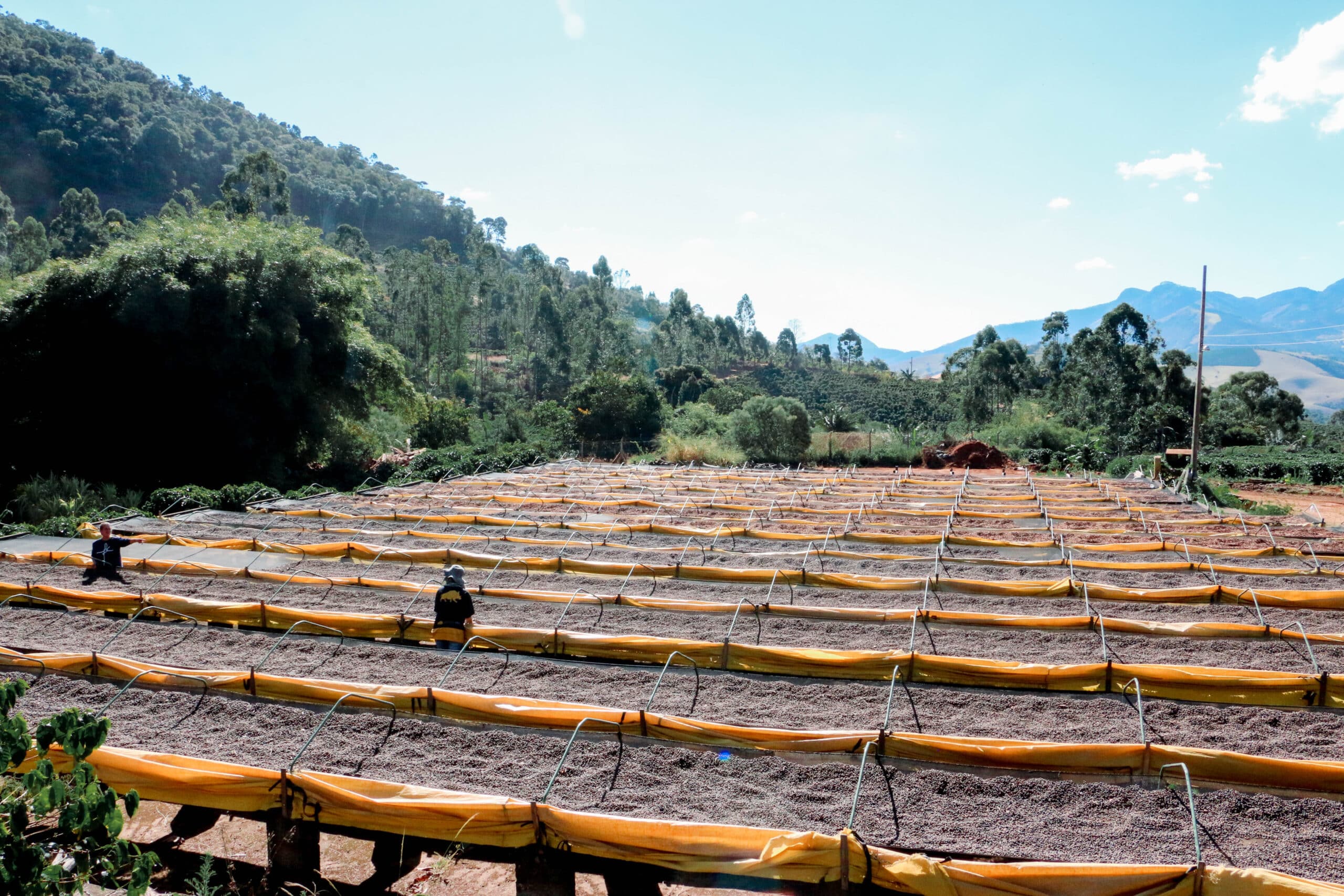
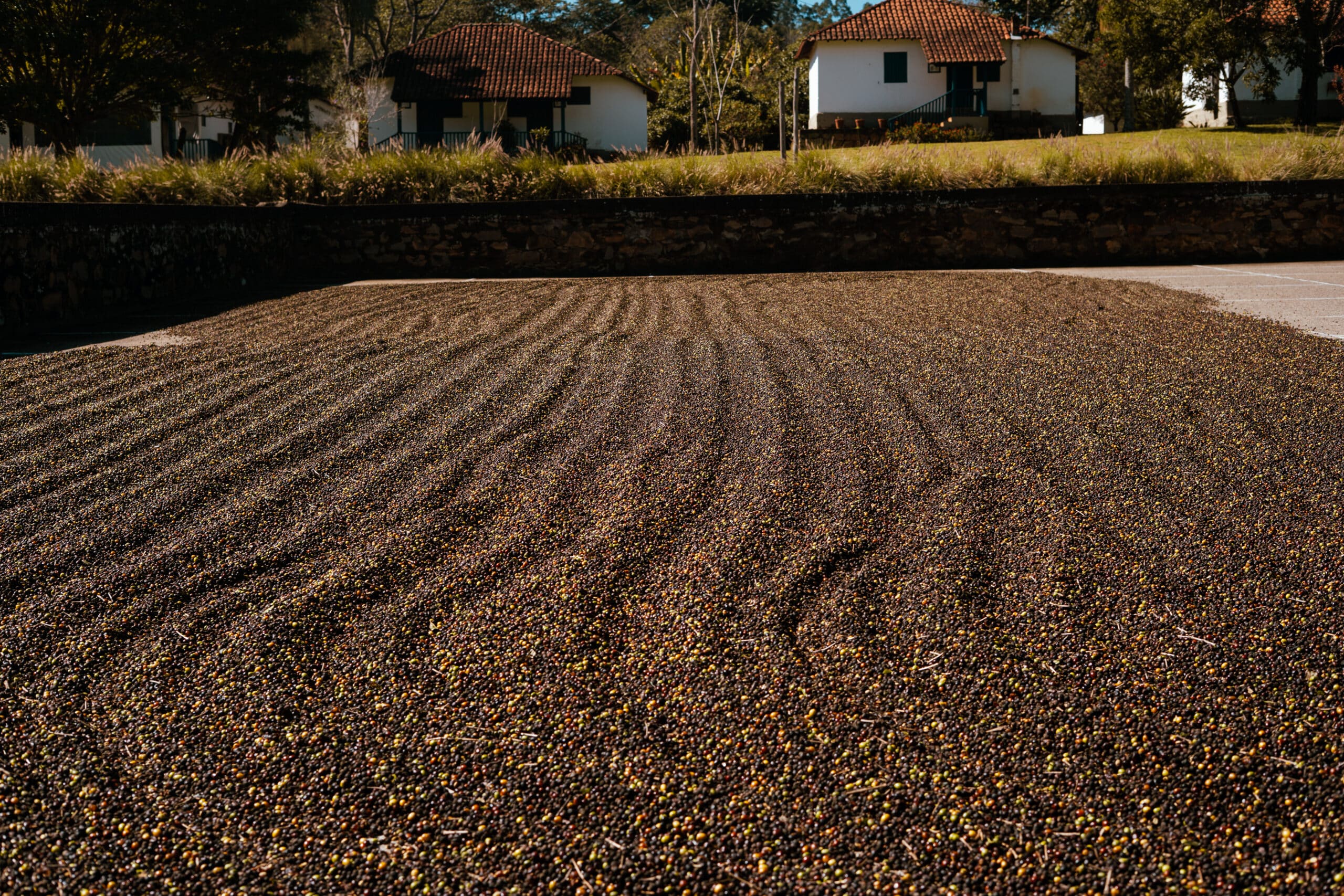
Basically, the method consists of completely drying the whole fruit keeping the skin, mucilage, pulp, and seed intact on a drying patio, which can be paved or suspended. In addition, the fruits can arrive at this patio in two distinct ways:
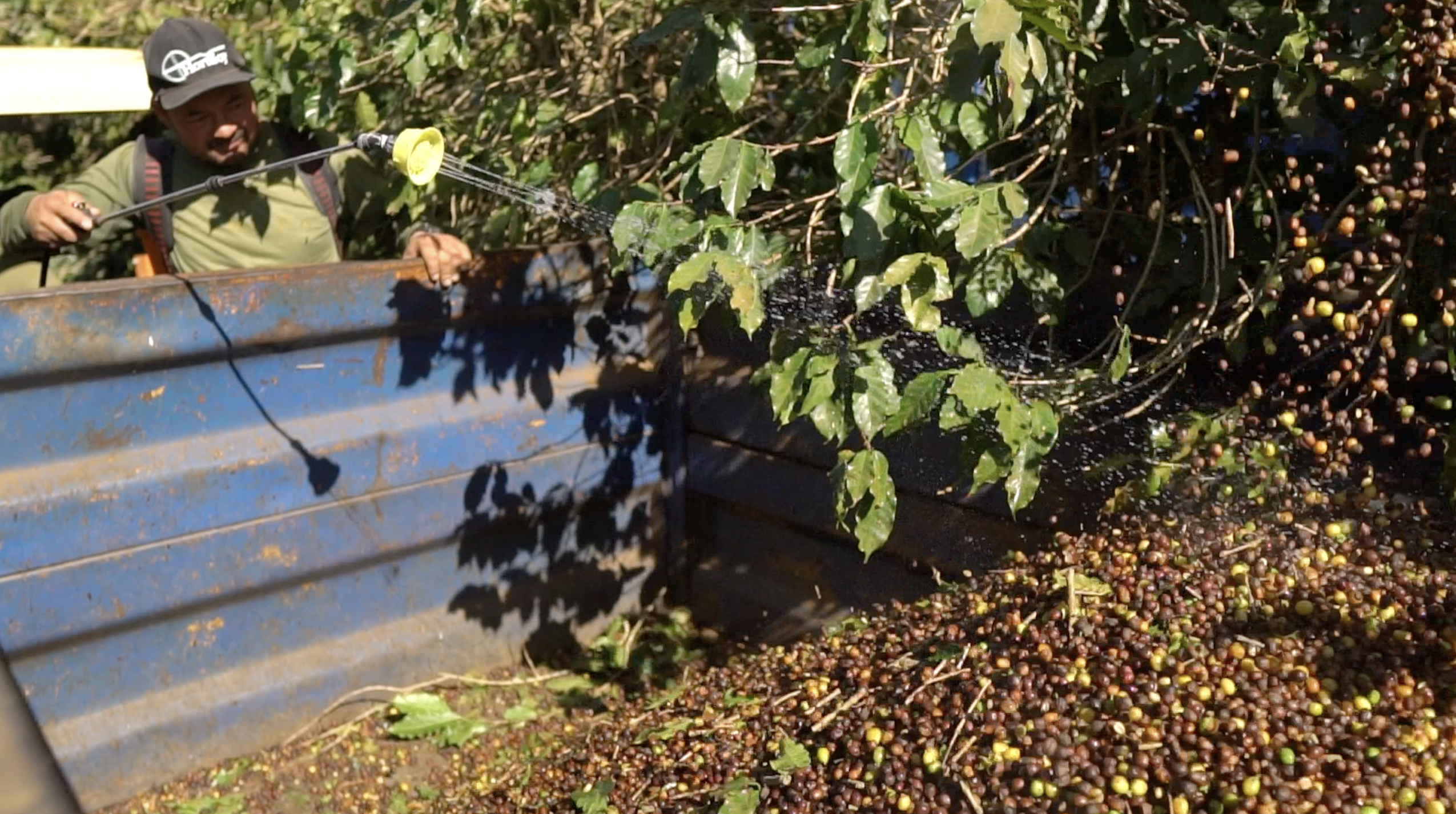
The ripe cherries proceed to pulping and demucilaging. The green fruits, due to their high density, do not pass through the pulper; therefore, they are sent directly to the patio, where they dry whole alongside the batches of floaters and overripes.
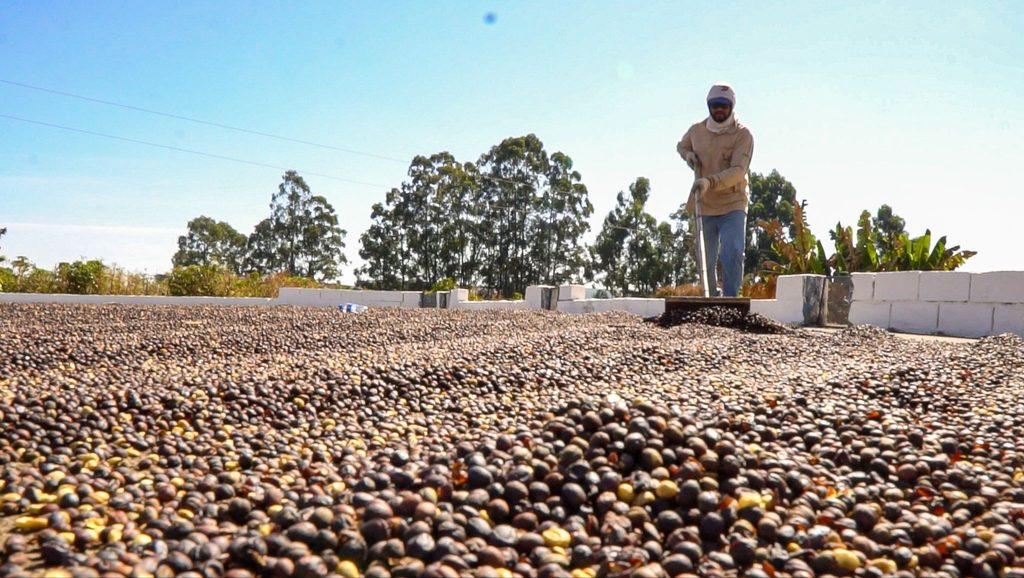
To ensure excellence, conventional drying patios are built with concrete, asphalt, or stone. These materials do not transmit unwanted odors to the coffee and retain heat, contributing to uniform thermal drying. Beyond these physical conditions, positioning must be strategic, requiring locations with full sun exposure for most of the day.
More than just a traditional post-harvest method, the dry process guarantees the producer an optimized operational workflow, reduced costs, and lower waste generation. By minimizing water use and significantly reducing organic waste, the method ensures operational excellence and cost efficiency for the farm. Regarding the profile, because the coffee dries in its whole form absorbing all the sugars and nutrients from the skin, pulp, and mucilage the result is a beverage with a full body, pronounced sweetness, and intensely fruity notes.
What is the ideal coffee processing method? This answer is quite relative. All coffee processing methods have the potential to deliver excellence, provided the farm executes them with technical rigor. Therefore, the ideal processing is always the one that achieves the sensory profile your client or master roaster is looking for.
What is the sensory profile of dry-processed coffees?
Because the team dries the bean in direct contact with the mucilage and pulp, the natural process transfers the fruit’s sugars directly to the seed. Consequently, the result in the cup is a remarkably sweet, full-bodied coffee with slightly citric acidity.
What are the drying methods for natural coffee?
Producers predominantly dry the coffee on cement patios, asphalt patios, suspended drying beds (African beds) built with wood and mesh, or in mechanical dryers.
How long does it take for the coffee to dry completely?
The ideal moisture content of the green bean for export and storage ranges from 11% to 11.5%. Normally, considering the time spent on the patio and resting, the bean reaches this level of stability after about 7 to 12 days of processing.