After drying on the patio, the coffee needs to be refined to reach the ideal state for commercialization. To achieve this, it goes through a process called dry milling. In short, this stage consists of removing the husk and parchment from the seed, in addition to separating the best beans and eliminating defects and impurities. To achieve the perfect result, the coffee goes through a series of rigorous processes inside the milling machinery.
Before entering the machines, the coffee rests for about 30 days in wooden structures or bins called silos (tulhas). During this period, the bean stabilizes, and the water present inside its cells finishes migrating to the surface and evaporating. This stabilization is crucial to prevent cracking and mechanical damage in the subsequent stages.
To be directed to the milling machinery, the coffee must meet rigorous criteria, with moisture being one of the main ones. The ideal rate is around 11% to 11.5%. The moisture content cannot be lower than 10%, as the coffee becomes brittle and can crack due to the machine’s friction. On the other hand, beans with a moisture level above 12% retain too much water inside, making them whitish, susceptible to fungi, and resulting in a substantial loss of cup quality.
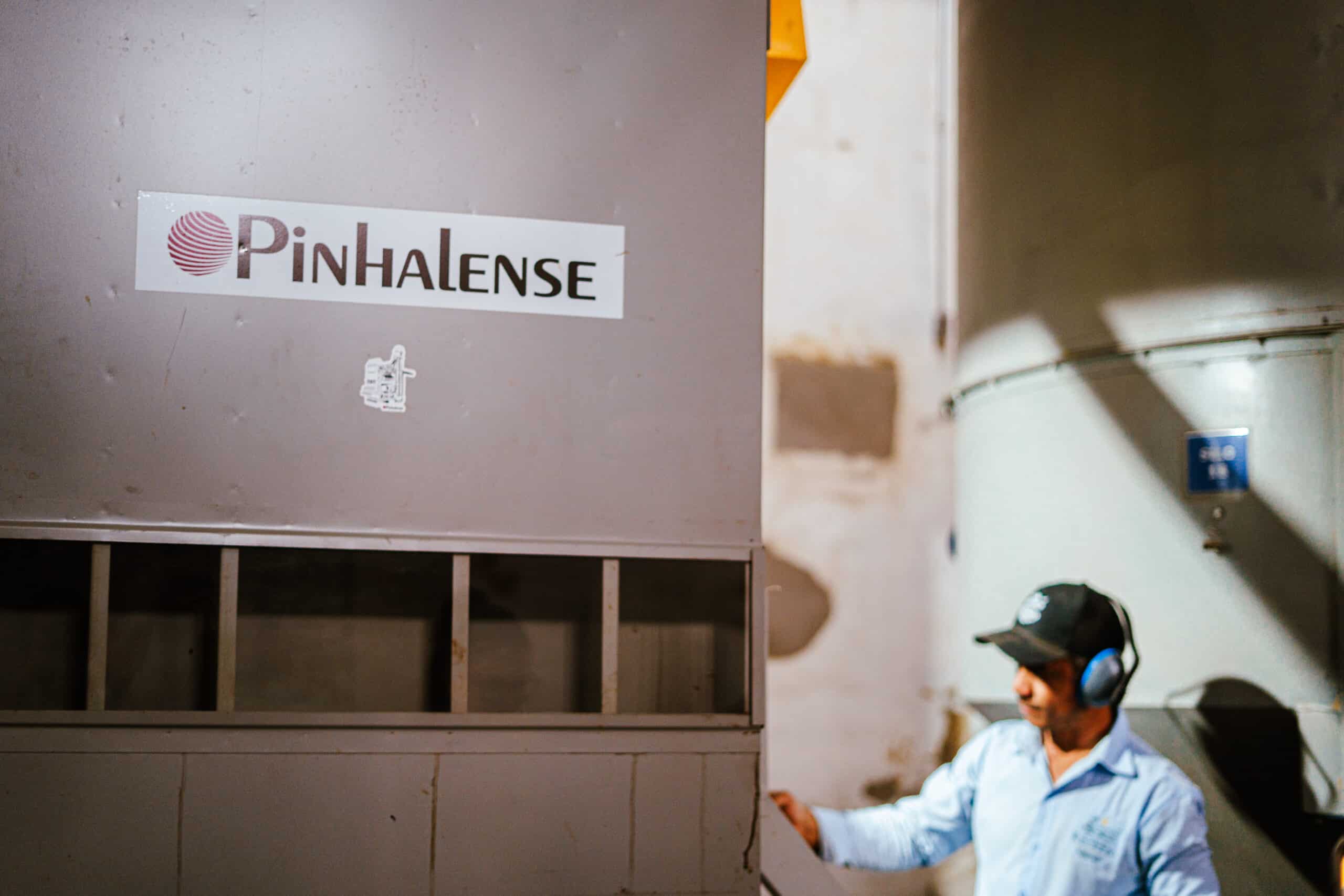
Before being hulled, the coffee goes through a preparation phase. First, it is directed to the pre-cleaning machine, which separates coarser impurities, such as pieces of branches, leaves, and dirt clods.
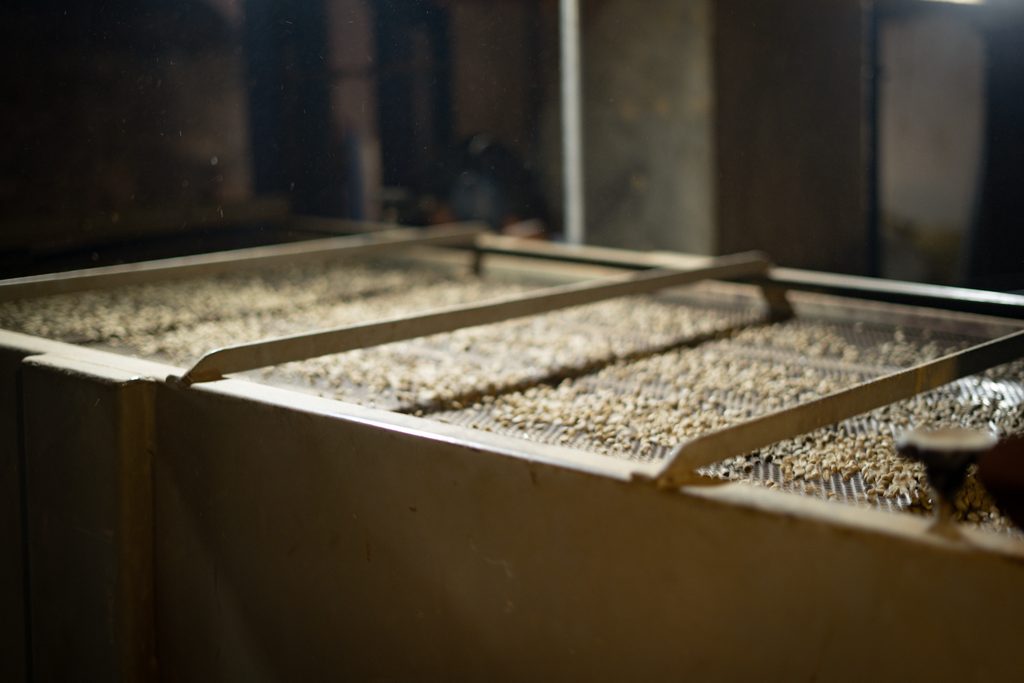
With the batch cleaned, the coffee enters the hulling machine. This equipment works through friction and ventilation. The beans enter a rotating metallic cylinder (rotor) that, while spinning at high speed, rubs the coffee against a screen.
If the coffee arrives as dried cherry (with the husk), the friction breaks and releases both the husk and the parchment. Simultaneously, a powerful exhaust fan vacuums these husks which are lighter separating them from the seed. If the coffee comes from a wet process (pulped/washed), it will arrive only with the parchment, and the machine will simply remove this protective layer.
After passing through the huller, the beans are directed to the gravity table (density separator). This machine uses a combination of inclination, vibration, and continuous airflow. It separates the beans by weight: heavier and denser beans are separated from the lighter ones, such as husk fragments, broken beans (shells), malformed, or hollow beans.
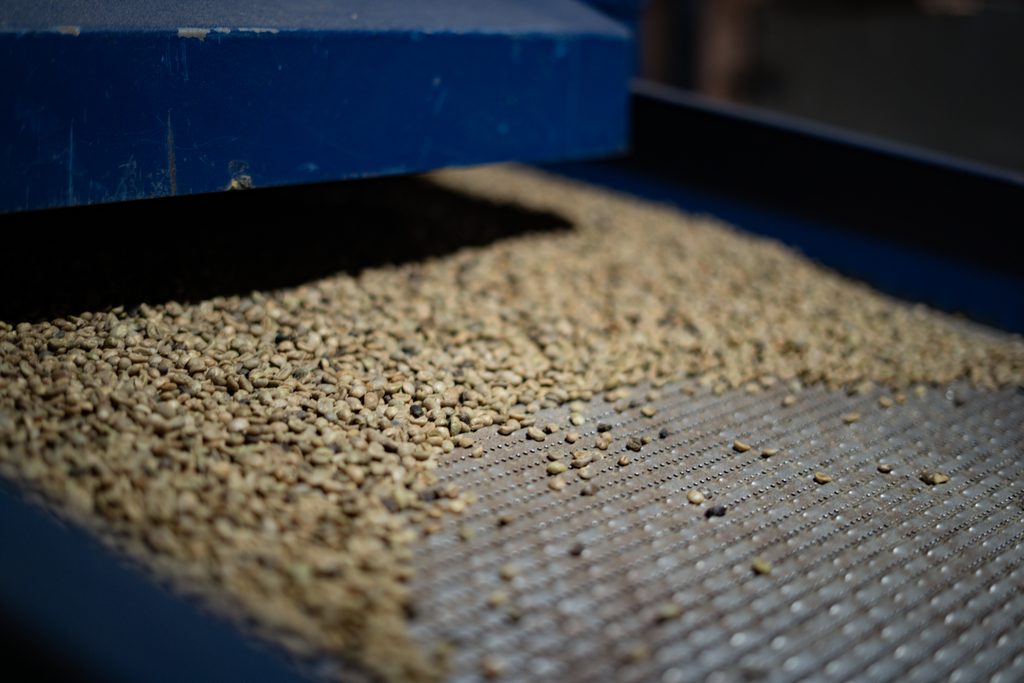
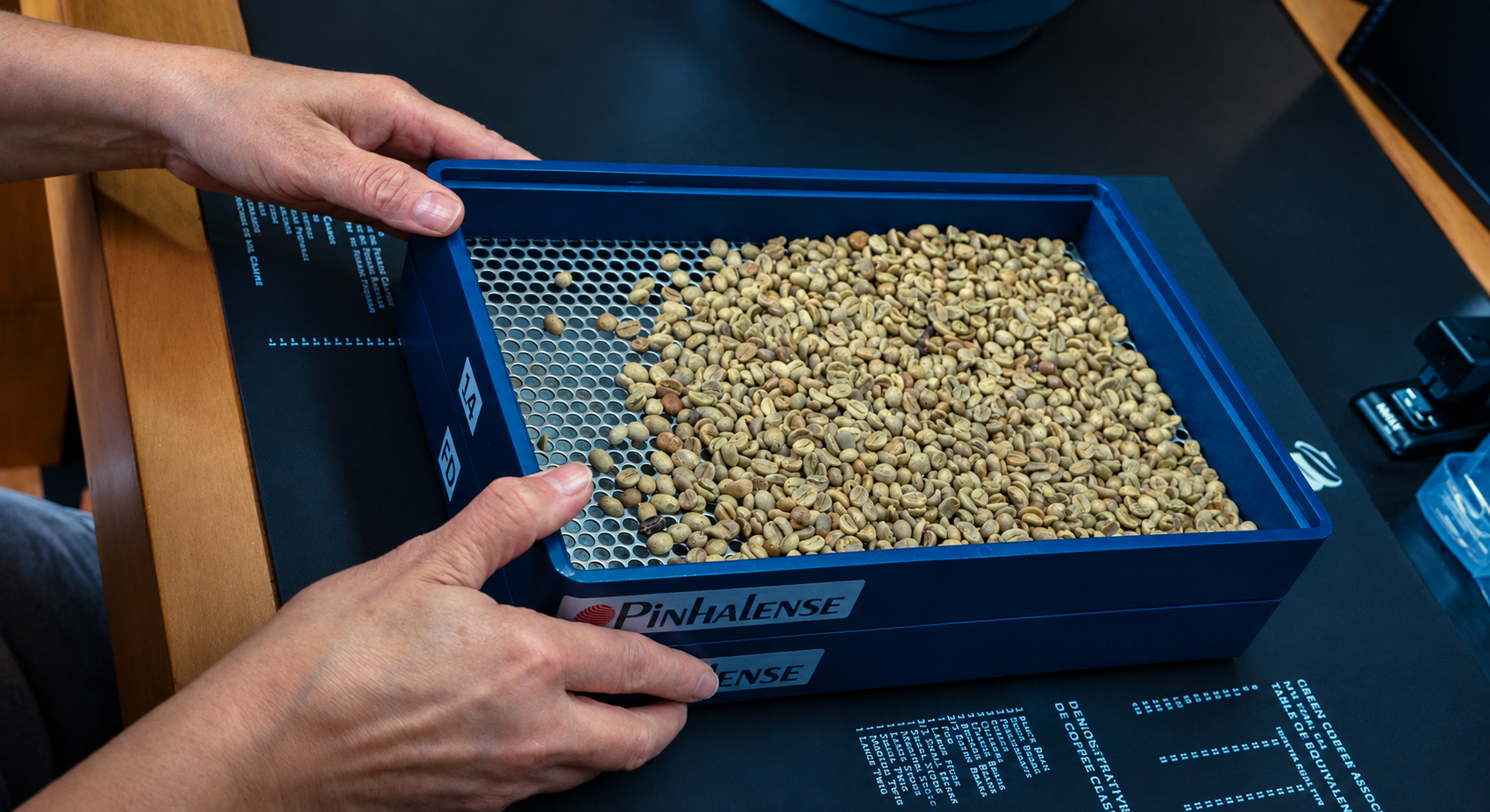
The coffee passes through vibrating screens to ensure the beans are perfectly homogeneous in size, which is fundamental to achieving a consistent result. This step is vital for the roasting stage, as smaller beans roast faster than larger ones. Therefore, sorting the beans by size is extremely important for an even roast.
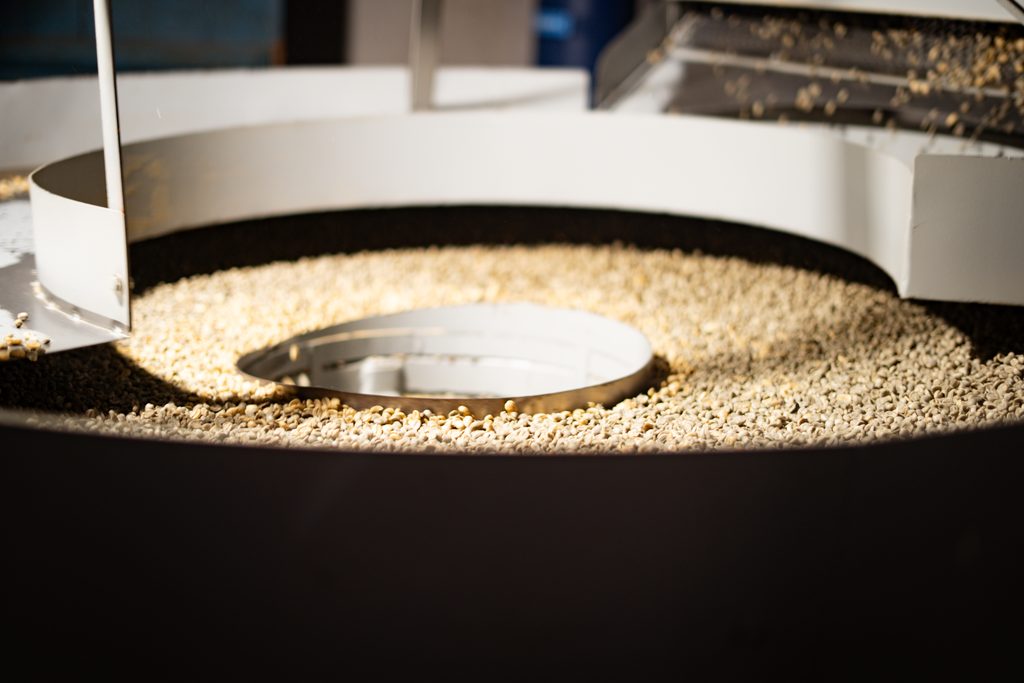
Finally, we have the electronic optical sorter. This is the most advanced and precise stage, capable of removing defects that density separation cannot catch. The beans pass individually through channels where they are scanned by optical reading cameras. If the sensor identifies color deviations, the machine shoots a jet of compressed air in milliseconds to expel the defective bean. This is where the final defects are removed.
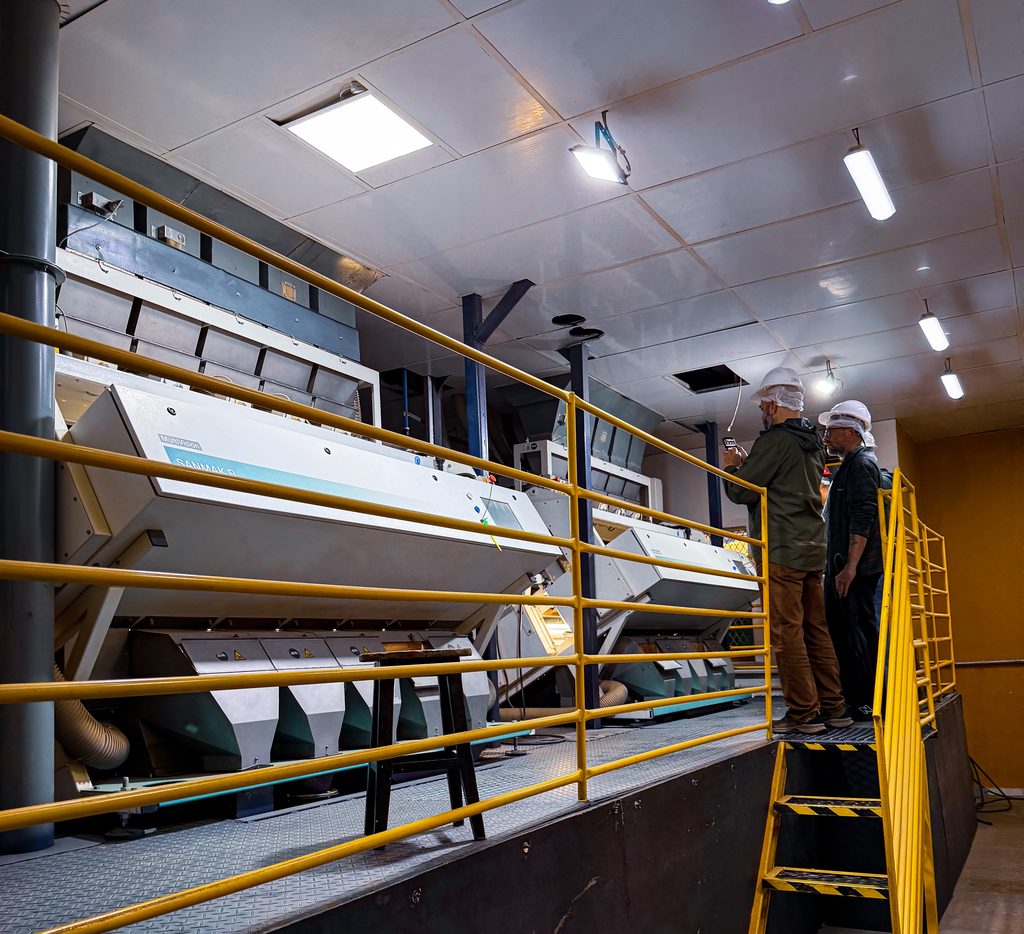
It is important to highlight that the complexity of the machinery structure varies according to each property. Some farms operate with compact, combined machines that concentrate only the fundamental stages of pre-cleaning, destoning, hulling, and screening. Once processed under these conditions, the beans reach their commercial form and can be traded. For high-quality lots, the journey continues: the coffee is sent for re-milling in specialized warehouses, where it will go through the advanced stages of density and optical sorting to ensure its absolute purity.