Coffee drying is one of the most critical stages in post-harvest management. After harvesting, the beans must have their moisture reduced in a controlled manner to halt undesirable processes and preserve essential sensory characteristics, such as natural sugars and flavor precursor compounds.
Although frequently viewed as a more straightforward operational step, coffee drying is actually the moment of greatest vulnerability for the bean. After harvest, this is the phase with the highest risks of degradation and loss of market value.
A secagem é um método de conservação que consiste em reduzir a umidade dos alimentos, seja por meio de exposição solar ou calor artificial. O objetivo primário é inibir a proliferação de fungos e bactérias deteriorantes, garantindo a segurança do produto. No universo do café, além da função de preservação, a secagem atua diretamente no desenvolvimento e estabilização de precursores de aroma e sabor, moldando o perfil sensorial final da bebida. Adicionalmente, ela também reduz drasticamente o peso e o volume dos grãos, otimizando os custos logísticos de transporte e armazenagem para a exportação.
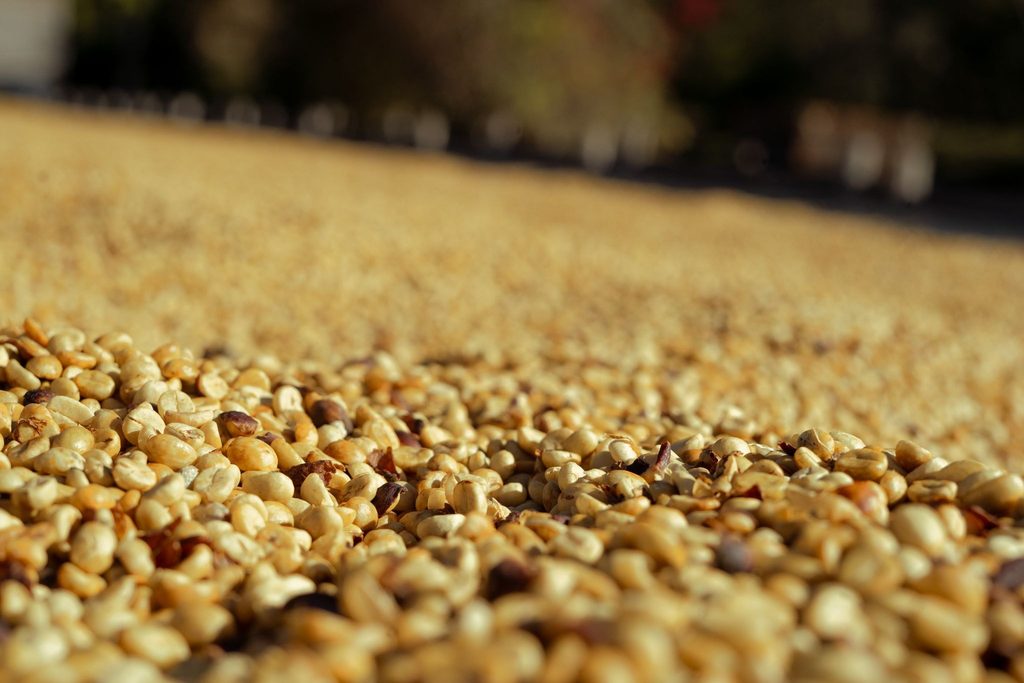
The choice of the ideal drying method varies according to the coffee processing natural, pulped natural, or fermented, and the sensory profile desired by the producer. However, regardless of the chosen technique (patios, greenhouses, or mechanical dryers), there are universal parameters that dictate the final quality of the lot.
The first is the temperature limit: the mass of beans must not exceed 40°C, risking cellular damage to the embryo and compromising flavor precursors. The second is the drying target: the process must be interrupted only when the coffee reaches the ideal moisture content, between 11% and 11.5%, ensuring the necessary stability for prolonged storage.
Each technology has its own temperature and management dynamics. Below, we detail the main drying systems applied in the market.
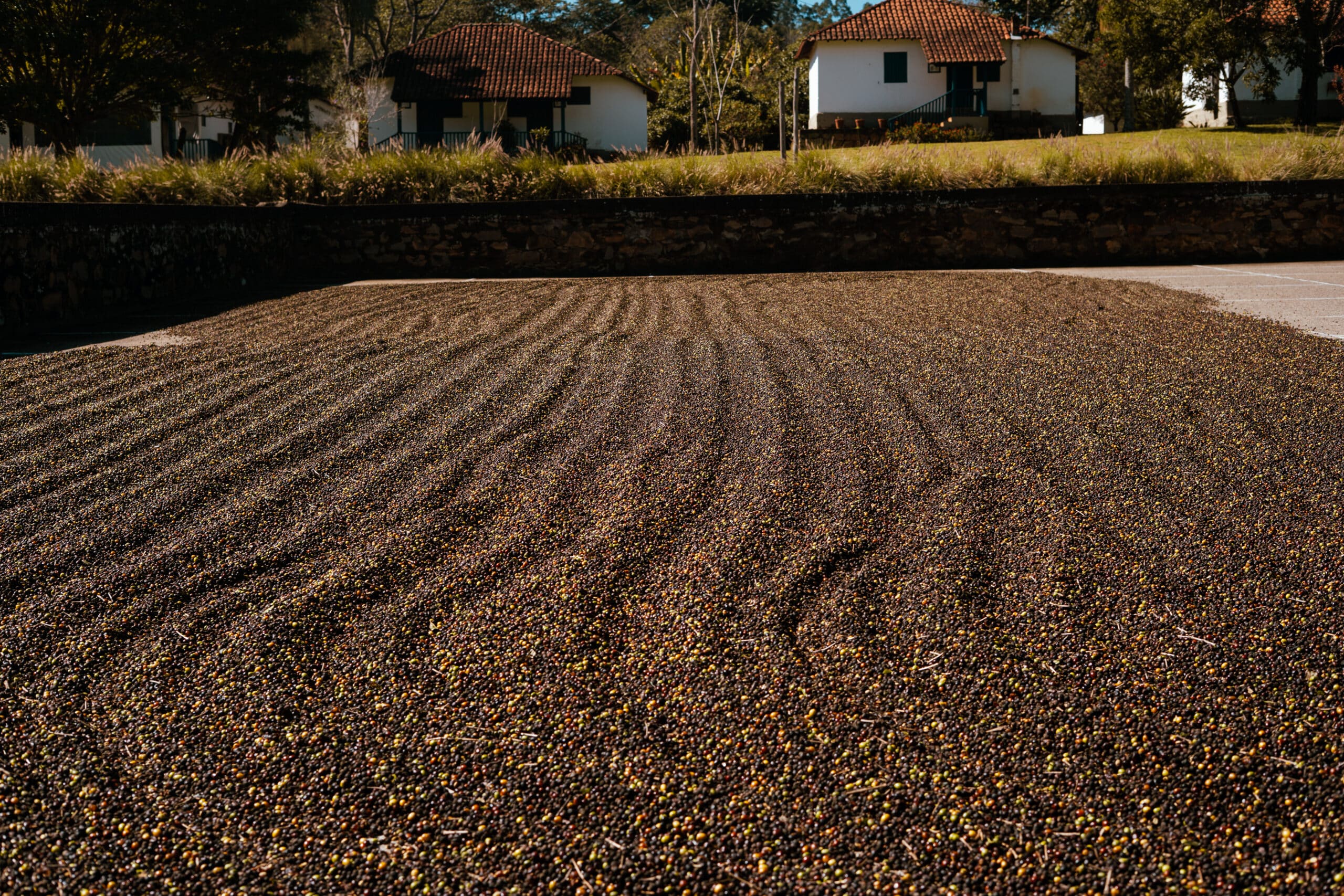
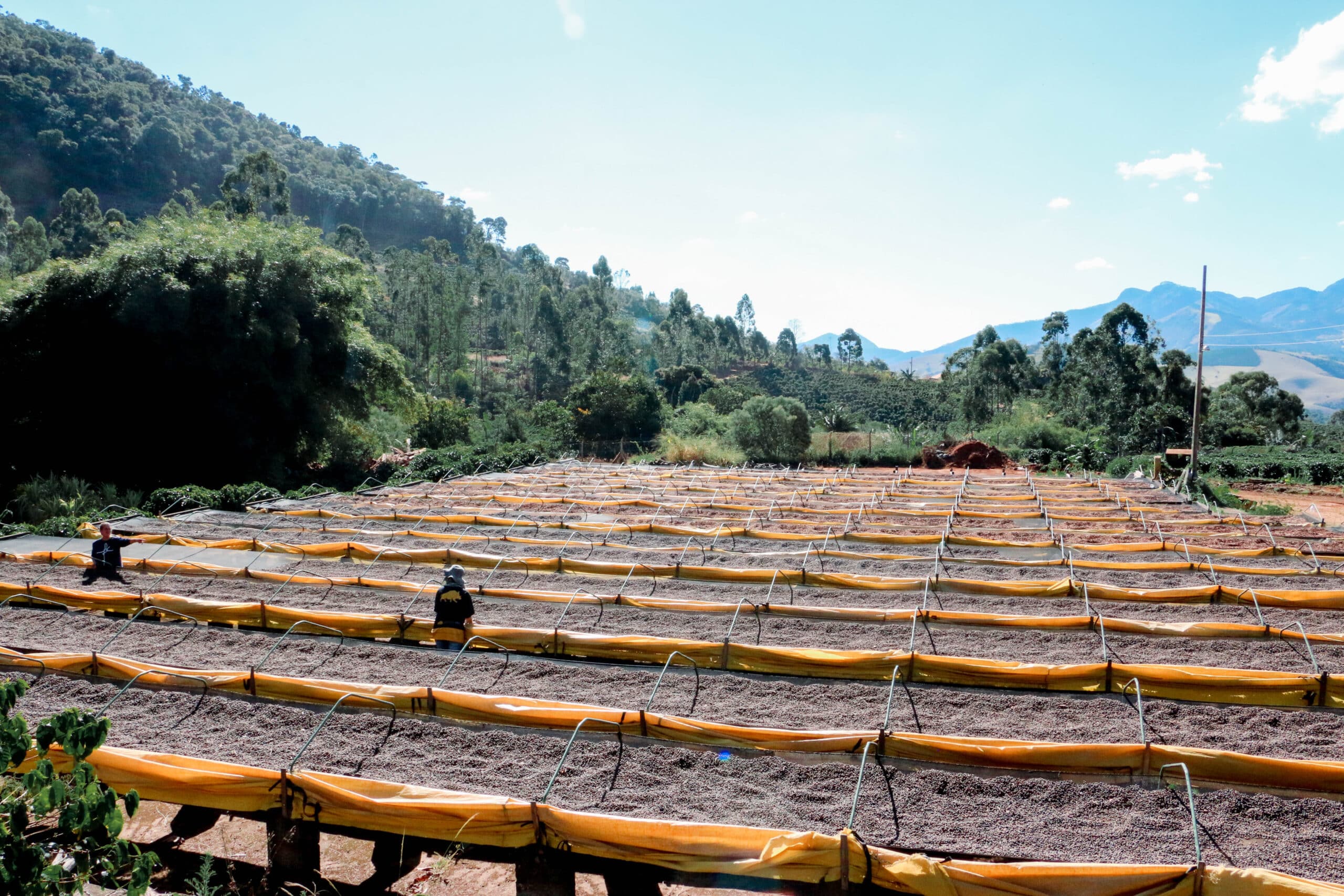
In the traditional patio method, freshly harvested coffee is spread in thin layers of 2 to 3 cm thick to accelerate the initial water loss. The infrastructure of this patio, which can be concrete or asphalt, directly impacts the thermal dynamics and management of the lot:
Features more gradual heating and cooling, offering a slower drying process, but safer against temperature spikes. Its smooth surface is highly hygienic, making it easy to wash and reducing the mechanical friction that can damage the bean’s protective layer (parchment) during raking.
Due to its dark color, it has a high rate of solar radiation absorption, heating the coffee mass much faster and accelerating drying. However, it requires intensive management and constant raking, as the risk of exceeding the critical 40°C limit is high. It is essential to use agricultural asphalt (hot-mixed and sealed) to prevent any transfer of chemical compounds or petroleum odors (phenol) to the beverage.
Once on the patio, the coffee requires continuous attention. To ensure a premium lot, the beans must be turned (raked) every hour (during the 7 to 20 days of the process). This uninterrupted movement is vital to ensure homogeneous drying and prevent the mass from suffocating. Operationally, the farm can take two routes:
The coffee remains on the patio until it reaches the final moisture content of 11%.
The lot dries on the patio only up to the “half-dry” stage (around 30% moisture). Then, it is directed to mechanical dryers to optimize time and infrastructure usage.
Additionally, nighttime management is essential. By late afternoon, the beans are gathered into mounds and covered with agricultural tarps, creating a barrier that prevents the reabsorption of water from the night dew and keeps the mass temperature stable until dawn.
The raised bed is popularly known as the African bed. Instead of the ground, the coffee rests on a structure of elevated screens, completely altering the dynamics of the process. The main technical advantages include:
Air circulates freely above and below the beans, promoting a perfectly homogeneous and gentler moisture loss.
The elevation eliminates contact with the ground, protecting the lot against dust, soil moisture, and fungal contamination.
The continuous airflow prevents overheating and unwanted fermentation of the mass.
Just like in traditional methods, the management routine cannot be neglected. The beans are turned several times a day, and at nightfall, the coffee must be covered with tarps to avoid interference from the dew.
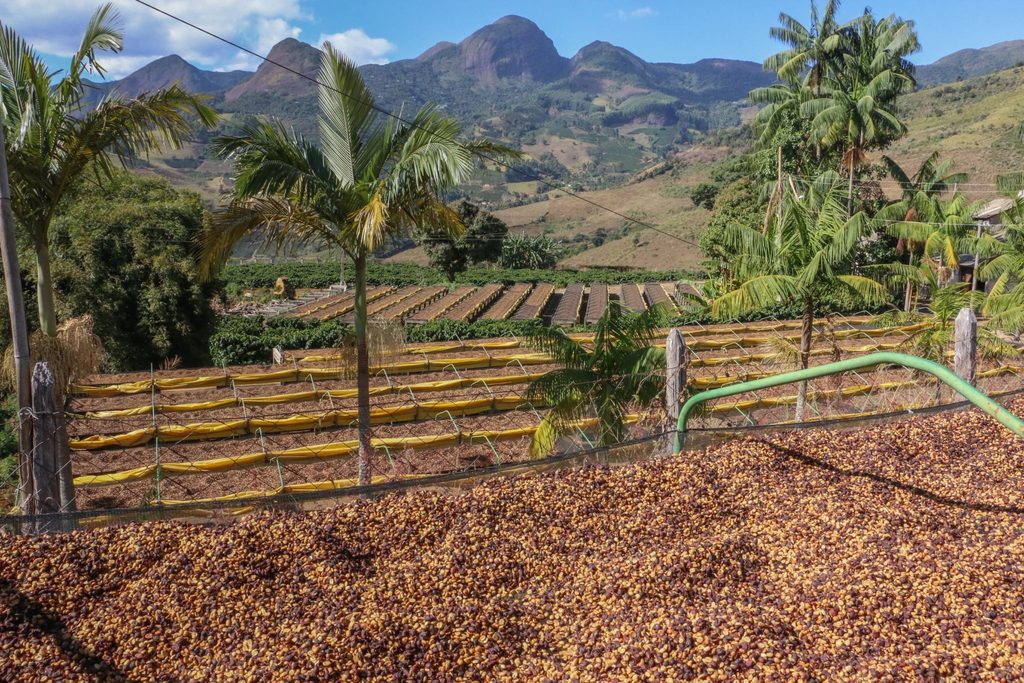
The solar dryer also known in the specialty coffee market as a greenhouse or parabolic dryer—elevates post-harvest control by isolating the beans from weather variations. By drying under a plastic cover, the coffee gains exclusive operational and qualitative advantages:
The structure shields the lots against sudden rains and excess nocturnal moisture, drastically reducing the risks of unwanted fermentation or fungal attacks.
The tarp enhances heat retention, raising the internal temperature and accelerating the total drying time compared to traditional methods.
Due to the high heat retention, the work routine is demanding. The producer must rake the coffee several times a day and manage the structure’s ventilation to ensure that moisture evaporates and the beans are not “cooked.”
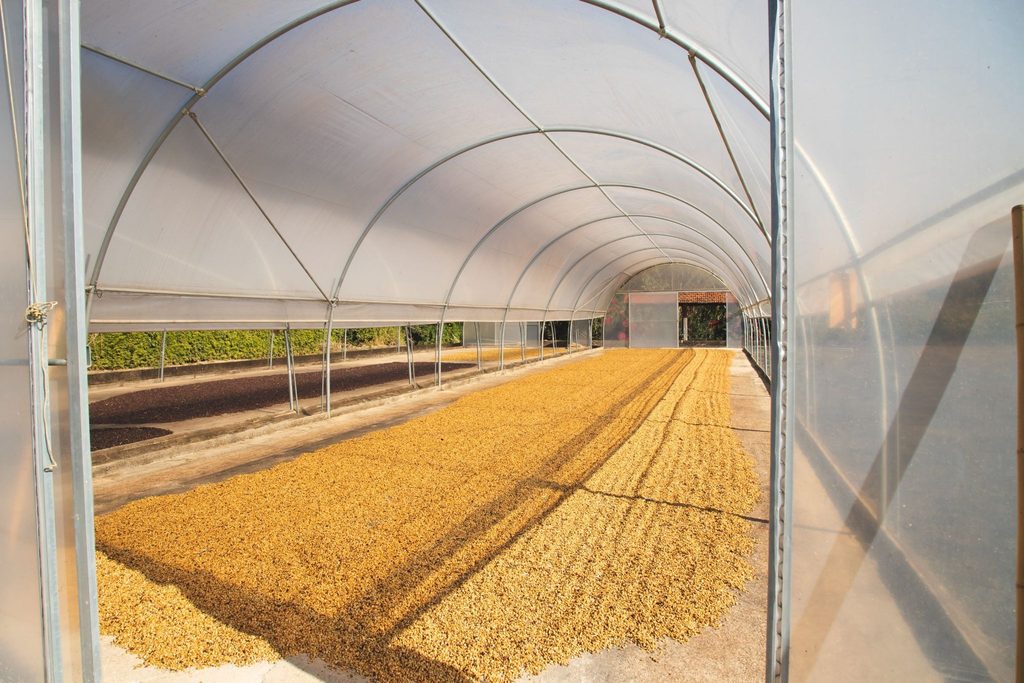
This technology revolutionized post-harvest management on coffee farms. This machinery offers autonomy and logistical predictability, ensuring that the drying process is not interrupted by climatic adversities, such as prolonged rains.
The method consists of loading the coffee into compartments where the beans are subjected to controlled flows of hot air (usually from wood, biomass, or gas furnaces). The passage of thermal air combined with the movement of the mass promotes a uniform and safe reduction of moisture. Currently, the coffee market uses two main technologies: rotary dryers, which continuously tumble the coffee in large cylinders, and static dryers, where the bean mass rests in boxes with perforated bottoms while hot air is forced from the bottom up.
Regardless of the technology or drying method adopted, the destination of the coffee before final processing is always the same: the resting bins (tulhas). These storage structures traditionally built of wood, mesh, or metal receive the lot right after it reaches the ideal moisture of 11%. However, these bins are not just for inventory, but for a vital physiological stage called the “resting period”. Over approximately 30 days, the residual water still inside the bean migrates from the center to the extremities, completely homogenizing the mass’s moisture. This rest stabilizes the cell membranes, consolidates the sensory profile, and, above all, relieves the thermal “stress” suffered during drying, ensuring that the coffee does not break inside the machines during the dry milling phase.
The drying stage demands as much dedication as the cultivation itself. It is a period of constant vigilance, in which the producer cannot neglect continuous raking, thermal limits, and, especially, weather surprises like rain. However, when this meticulous work is executed with excellence throughout its ideal window, the producer manages to seal the lot’s potential, ensuring that all the quality developed in the field arrives intact in your cup.