The coffee planting process consists of many stages and steps. This ranges from soil preparation to growth, fertilization, pruning, and spraying. Each process requires care, investment, and hard work until the harvest is reached. In coffee farming, every step makes a difference. A micro-decision can impact a plot or even an entire crop. Therefore, attention to detail and strictness in the process are never too much. In this article, we will look at the preparations that the producer cannot forget under any circumstances. The goal is to ensure the harvest is as productive as possible.
When management is precise, the harvest generally occurs between May and August. It can extend into September depending on the region and climate. Respecting this window is crucial for the bean to reach its maximum flavor potential.
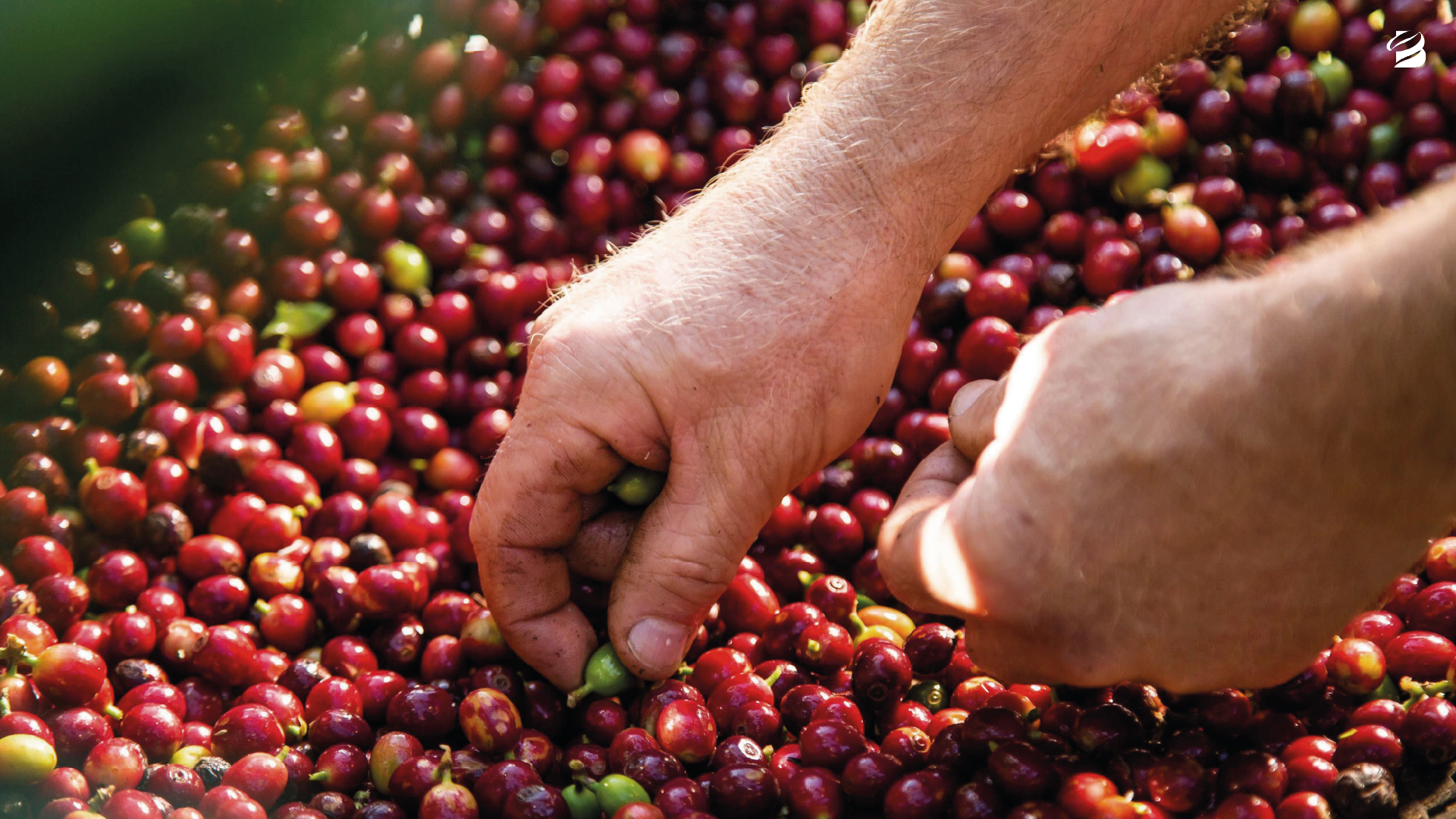
Ideally, the harvest should be carried out with the highest possible percentage of coffee cherries (beans that have reached their ideal state of ripeness). Keep green beans to a maximum of 15% to 20% to ensure a balanced maturation.
As a single farm can cultivate different coffee varieties, it is essential to map and separate each plot. The areas designated for specialty coffees require extra attention, adopting exclusive and much stricter harvesting protocols to ensure maximum quality and yield.
In a single plantation, there can be more than one type of coffee, so it is important to distinguish each plot of different species or varieties. Plots producing specialty coffee must receive special attention and care to ensure their harvest is as careful and fruitful as possible. Normally, the harvesting process for these types of coffee tends to be differentiated and involves stricter procedures.
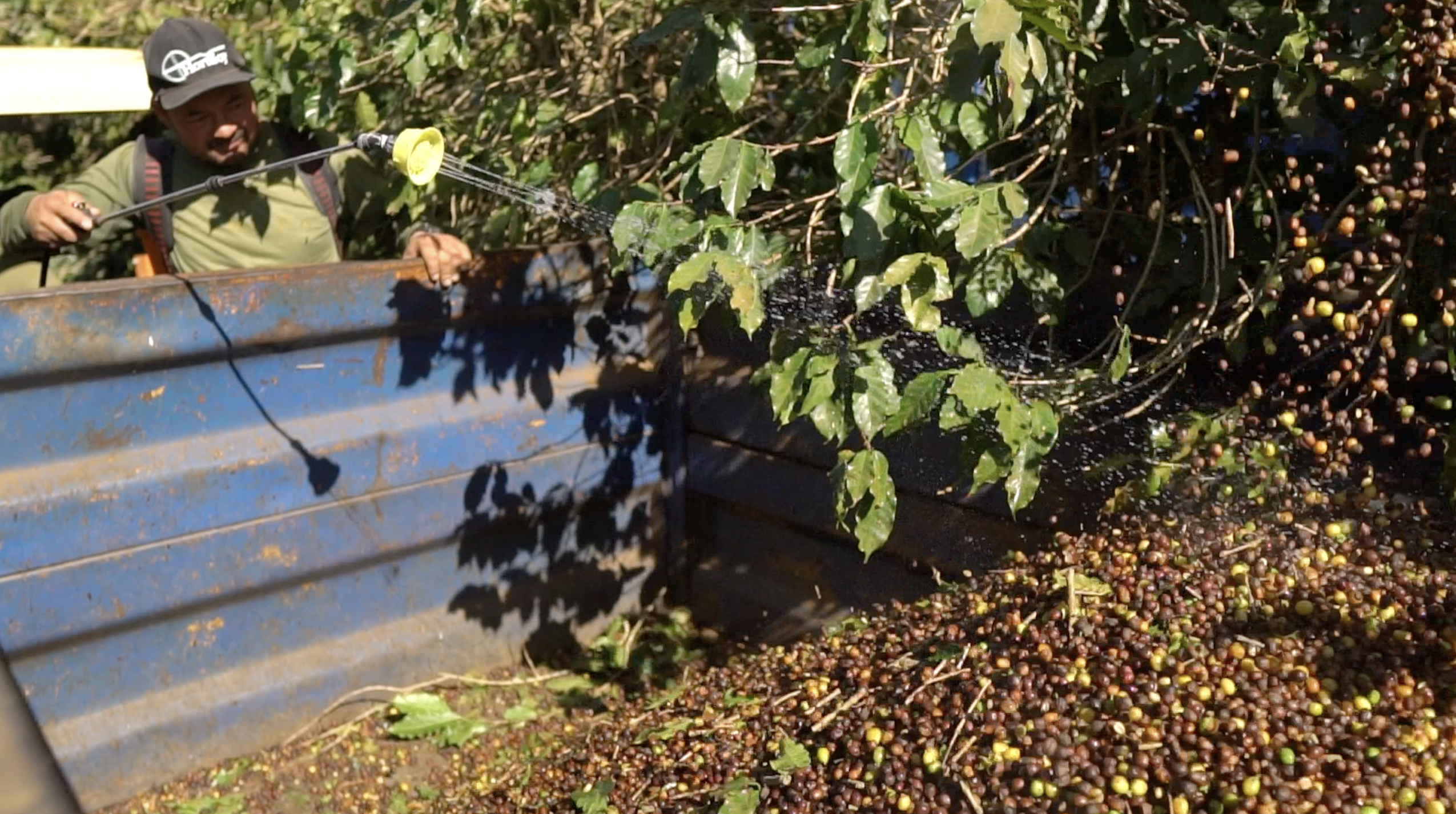
Selective manual harvesting prioritizes full ripeness. This type of harvesting is particularly recommended for mountainous areas, given the difficulty of mechanization in such topography. Furthermore, it is the ideal method for producers focused on high-scoring coffees. Although it requires a higher investment in labor and has a lower operational yield, this technique ensures the integrity of the coffee plantation and the purity of the batch, delivering a bean with superior sensory potential.
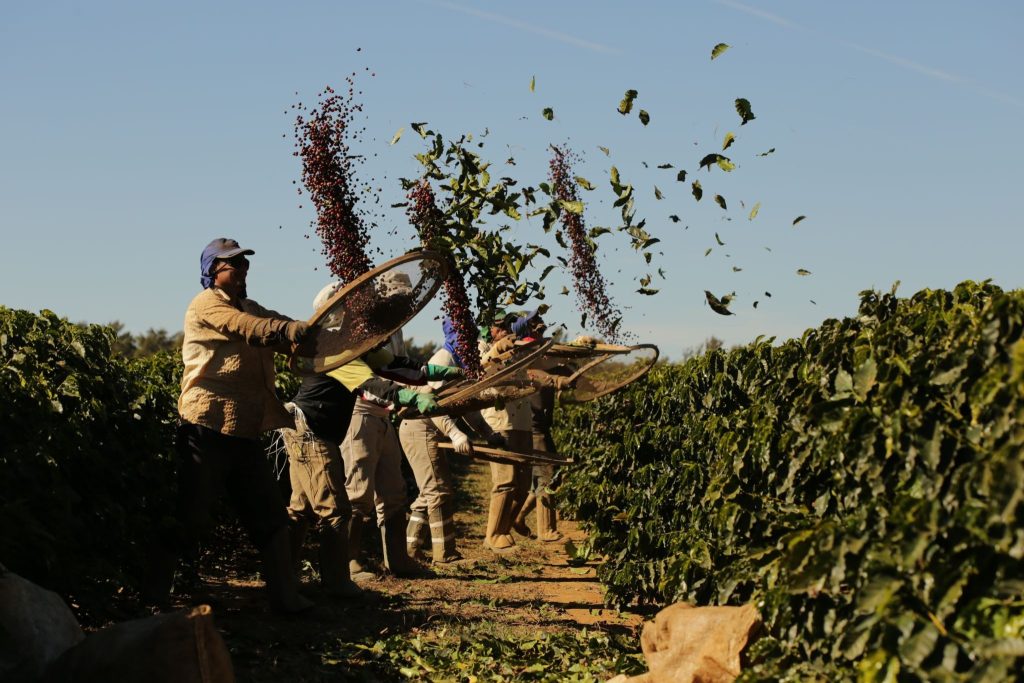
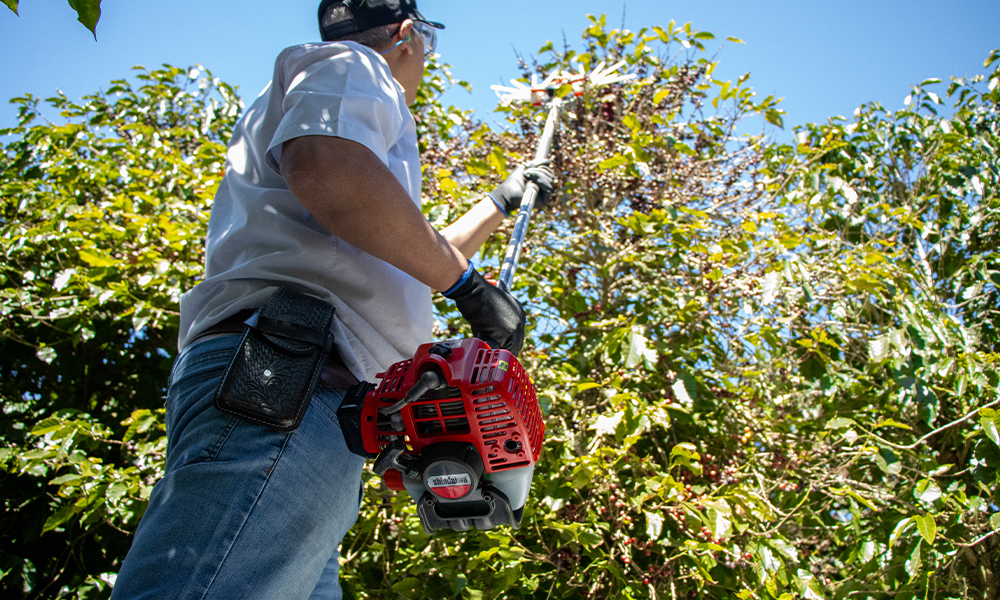
In semi-mechanized harvesting, portable mechanical harvesters with vibrating forks are used to detach the ripe fruits. With the help of tarps placed under the coffee trees, the collection process becomes more dynamic, optimizing labor yield without losing operational control over the coffee plant.
Font: © Brudden.
In semi-mechanized harvesting, portable mechanical harvesters with vibrating forks are used to detach the ripe fruits. With the help of tarps placed under the coffee trees, the collection process becomes more dynamic, optimizing labor yield without losing operational control over the coffee plant.
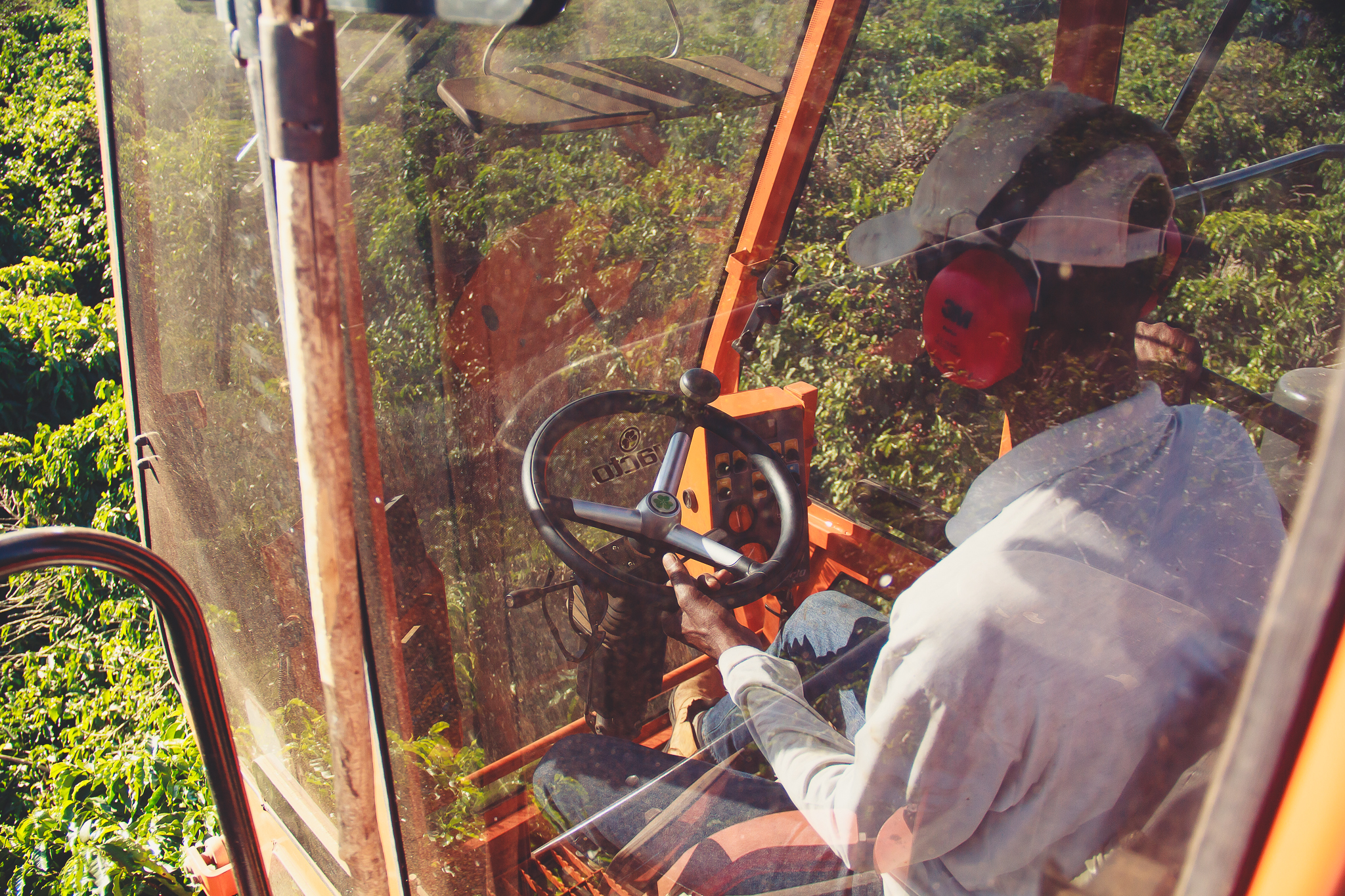
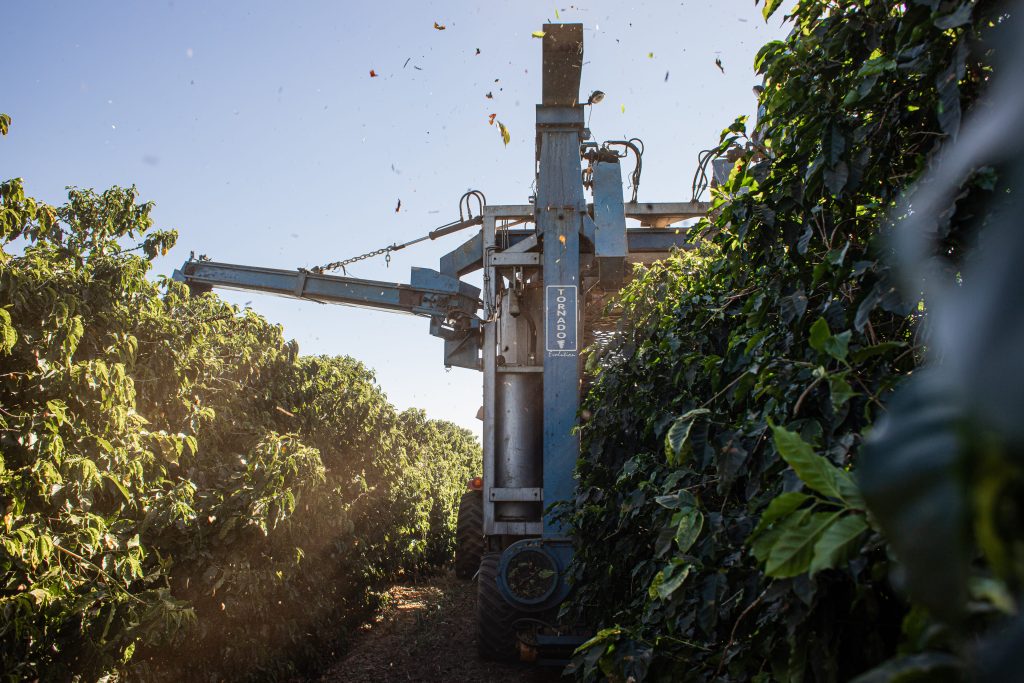
This method uses self-propelled harvesters that do the work as well as the mechanical shakers. They not only work on stripping the coffee but also perform the tasks of harvesting, cleaning, and storage without the need for manual labor.
Unforeseen events during the harvest can drastically impact the workflow, resulting in bean loss and financial damage. To mitigate risks, the coffee grower must carry out rigorous planning: inspect equipment, arrange repairs for machines and tools, as well as maintain fences and level uneven terrain. Such measures are essential to ensure maximum harvest productivity.
To ensure maximum productive efficiency and time optimization, all equipment must be ready and in perfect condition. It is essential to organize the items that will be used in advance, such as:
| Category | Essential Items | Purpose |
| Field Harvesting | Clean harvesting sacks and bulk bags, harvesting tarps, sieves, and sweeping rakes. | Collection and primary cleaning of the fruits. |
| Mecanização | Serviced portable mechanical harvesters and self-propelled harvesters. | Agility and operational yield. |
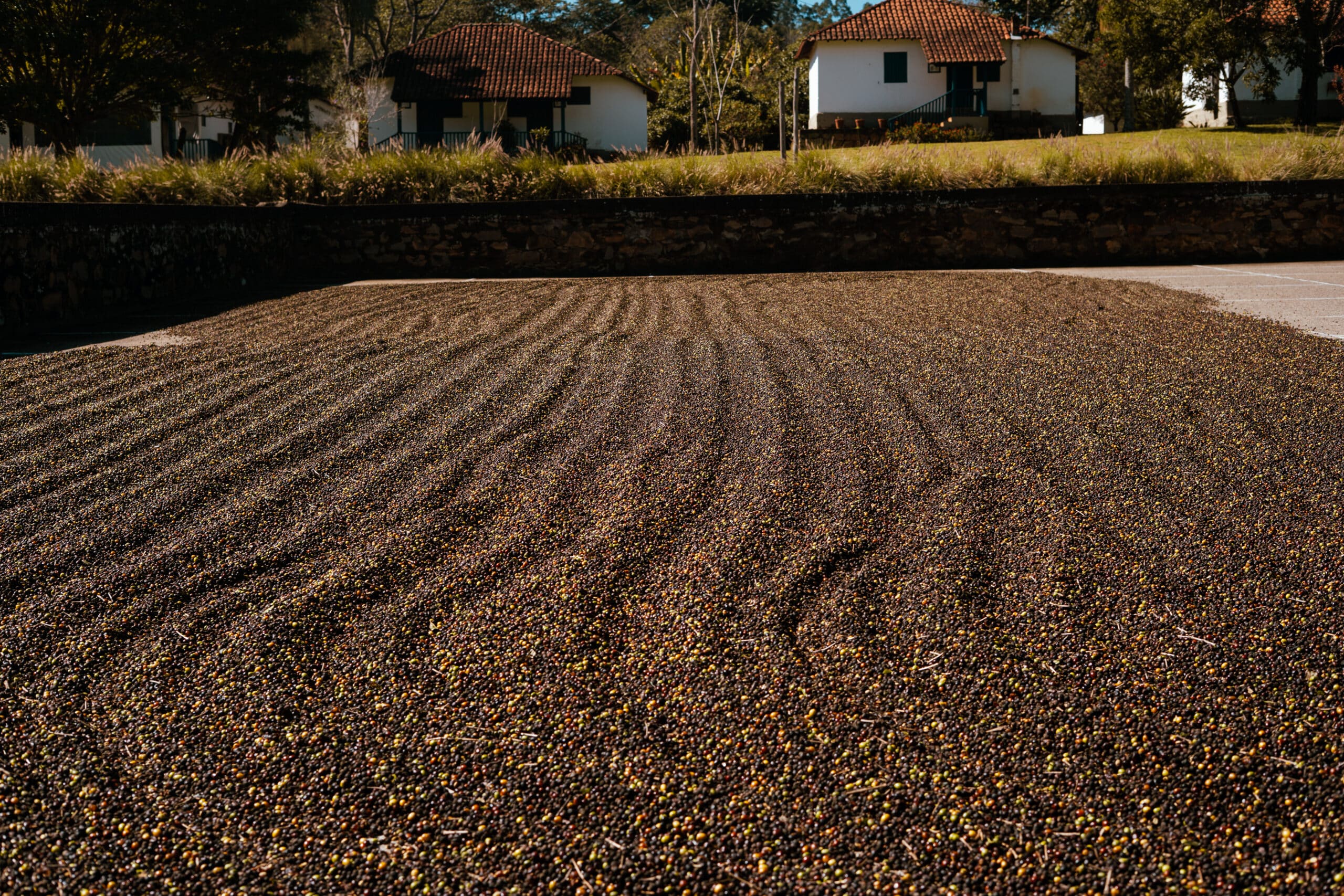
| Manejo no Terreiro | Wooden scrapers (rodos and vacas), buckets, wheelbarrows, and piassava brooms. | Movement and homogeneous drying. |
| Proteção de Lote | Cloths and tarps for covering coffee. | Protection against bad weather and quality preservation. |
| Segurança (EPIs) | Gloves, boots, gaiters, sun hats with neck flaps, safety glasses, sunscreen, and hearing protection. | Physical protection and compliance with labor regulations. |
Ground clearing consists of removing weeds and other debris present under the coffee tree canopy. This debris usually interferes during the harvest, as it can mix with the coffee beans on the ground, making the work more difficult. For this reason, clearing the coffee plantation rows is highly recommended. Similarly, vine removal also proves to be an essential process, as vines can obstruct and entangle the machines during bean removal or even damage the machinery.
Concurrently, team training is decisive for the success of the harvest. It is necessary to ensure that workers are qualified to operate machinery and tools with precision and safety. A well-instructed workforce not only optimizes the workflow but also reduces operational risks and losses in the coffee field.
In short, pre-harvest planning is crucial for the success of the operation. The decisions made now resonate beyond the current cycle, as they define the vigor and productive potential of future harvests.
In summary, harvest efficiency lies in the details that precede field operations. Ensuring that all tools and processes are properly aligned is essential to avoid downtime and setbacks. Do not underestimate the power of these preventive actions: they determine an optimized operational flow and a truly fruitful harvest.