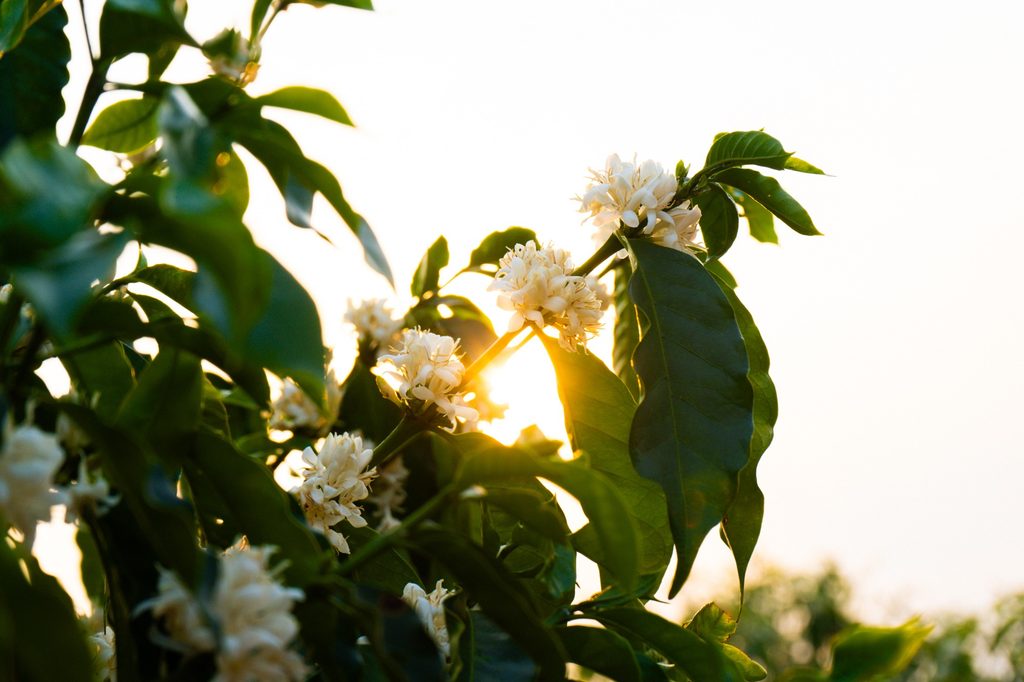
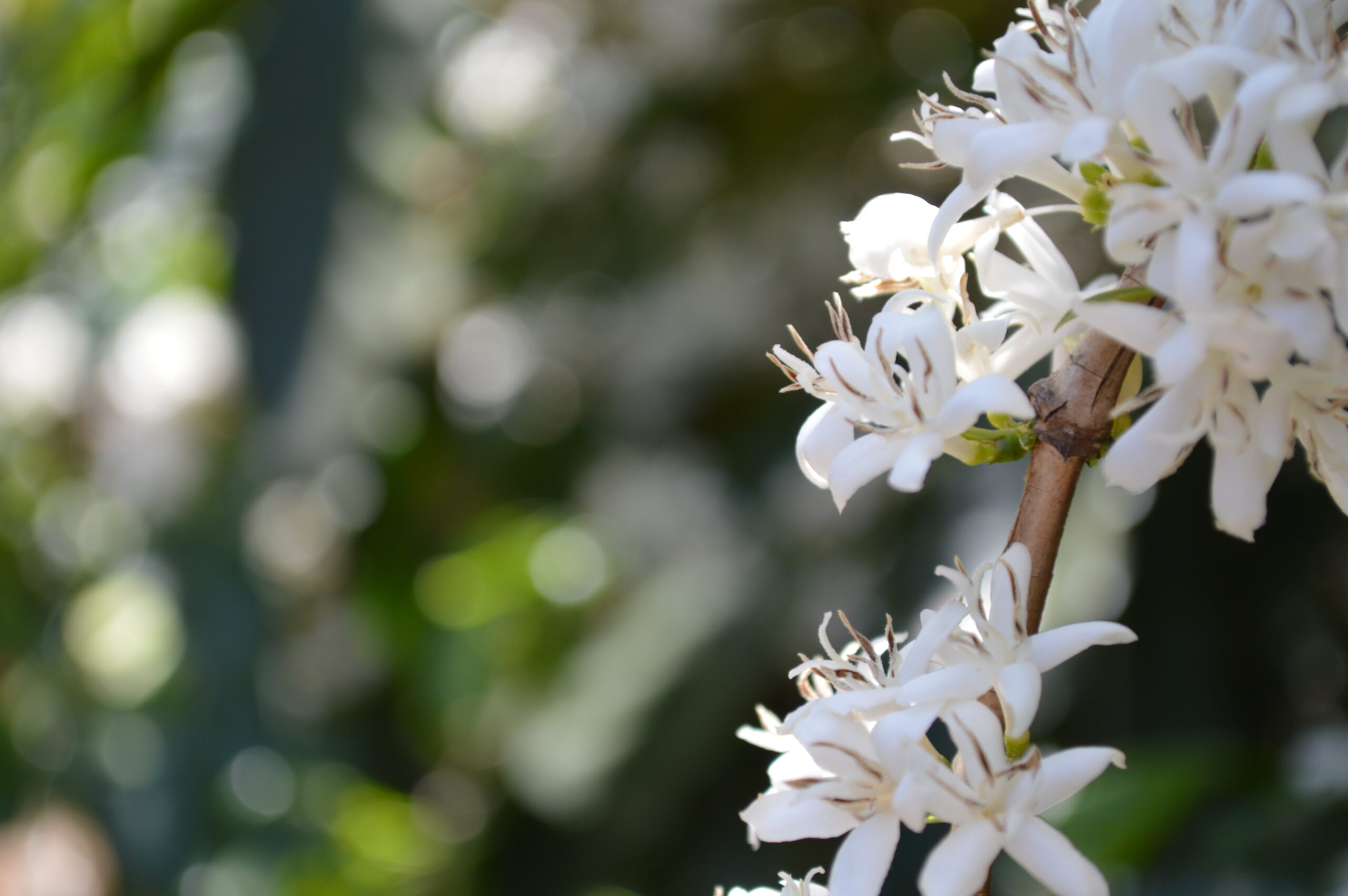
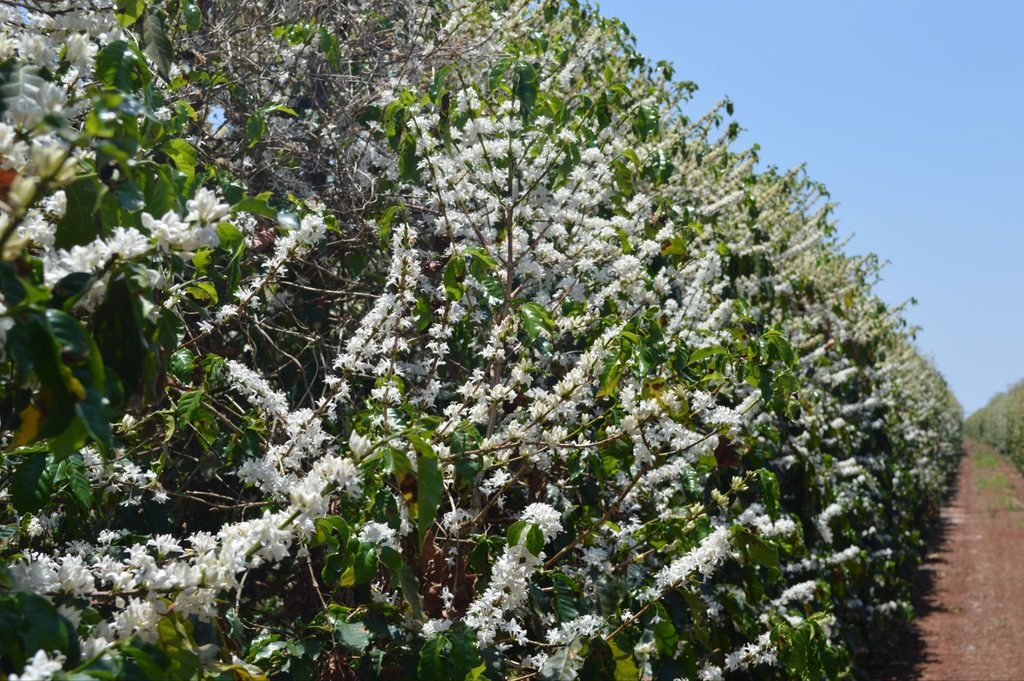
Coffee flowering is one of the most beautiful phases in the coffee fields. The trees fill with vibrant white flowers, perfuming the air with the characteristic scent of jasmine. The blossoms attract life from the singing of birds to the humming of bees and other insects that ensure pollination. But beyond the visual spectacle, what does this flowering really represent for the crops?
After harvesting, the coffee plantation enters a phase of dormancy and recovery known as vegetative rest, which typically occurs between late July and early August. During this stage, the coffee trees rest from mechanical damage and the stress caused by stripping the fruit.
The coffee plants can finally slow down, reduce leaf growth, and accumulate energy reserves in their roots and branches. The floral buds that have formed then enter dormancy, awaiting a moisture stimulus.
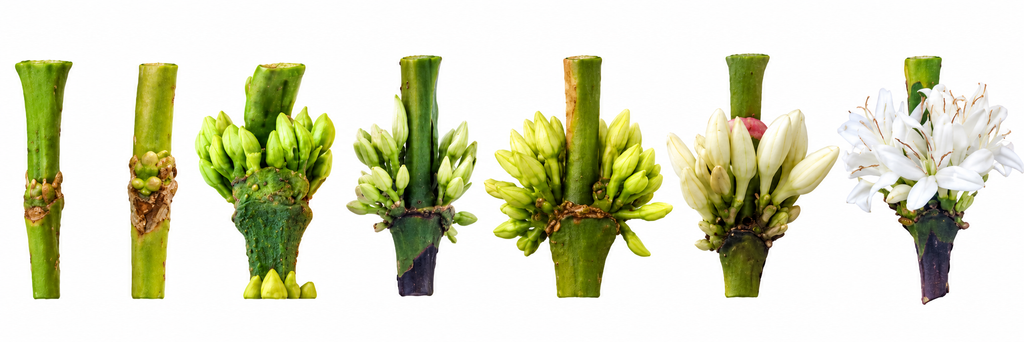
Floral buds are clusters of young cells located in the leaf axils along the branches of the coffee tree. These buds grow up to a certain point and then enter a state of dormancy following the dry period.
To ensure that the buds mature completely, several factors are essential, such as:
Photoperiod: Refers to day length (hours of sunlight). In coffee plants, shorter days (typical of autumn/winter) signal the plant to induce the transformation of buds into floral structures rather than vegetative ones. Furthermore, adequate sunlight ensures the photosynthesis necessary for accumulating carbohydrate reserves in the buds.
Temperature: Air temperature must remain within the ideal range for the crop (generally between 18 °C and 23 °C for Arabica coffee). Extremely low temperatures (or frosts) halt metabolic activity and cause bud necrosis (“burning”), while excessively high temperatures induce thermal and water stress, causing premature flower abortion and bud drying.
Hormonal Balance: The development and dormancy breaking of buds depend on the balance between growth-promoting and growth-inhibiting hormones. During water stress, levels of abscisic acid (ABA) increase, keeping the bud in a protective dormancy. With the arrival of water (rain or irrigation), a sudden hormonal change occurs: ABA levels drop sharply while the synthesis of gibberellins, cytokinins, and auxins rises, stimulating cell division, flower bud elongation, and opening.
When the first rain or irrigation occurs, the coffee tree rehydrates and awakens. The plant rapidly absorbs water, increasing the internal pressure of the buds and causing them to expand into a stage known as “matchstick” (cotonete) or “popcorn” (pipoca). Shortly thereafter, the flowers open fully within a few weeks.
As soon as the petals open, the fundamental process of pollination begins. In Arabica coffee (Coffea arabica), this cycle is predominantly autogamous that is, it self-pollinates, since a single flower contains both male reproductive organs (stamens) and female reproductive organs (pistils). On the other hand, Conilon coffee (Coffea canephora) is an allogamous plant, meaning it relies on cross-pollination and requires external agents such as wind and pollinating insects to achieve fertilization. In Arabica, about 10% of fertilization comes from cross-pollination.
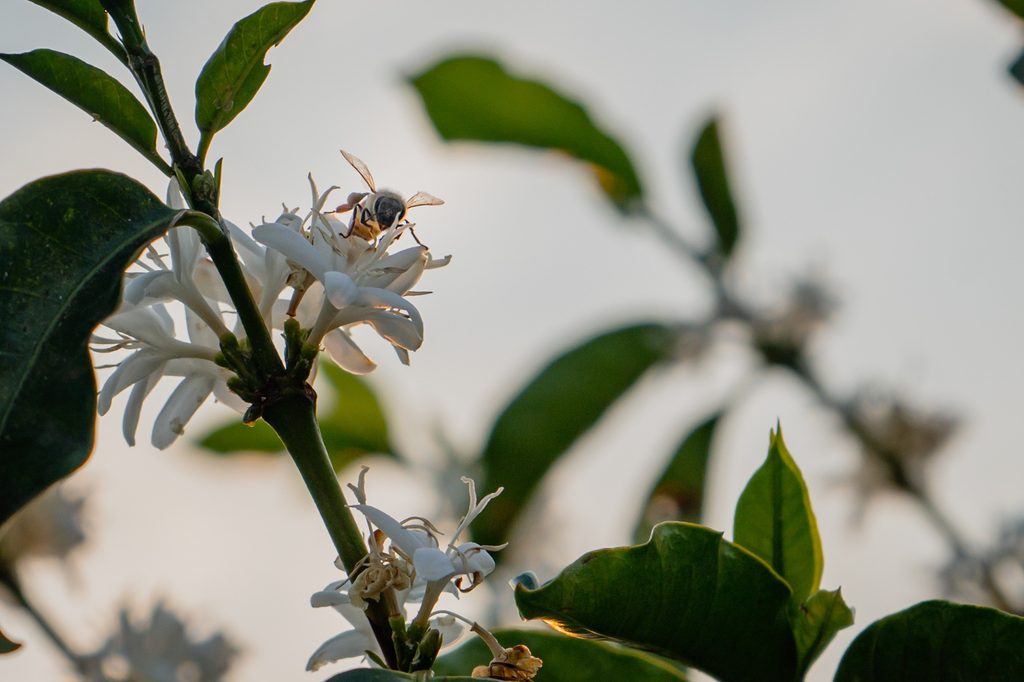
Without fertilization, there are no fruits. Every coffee flower has the potential to produce a fruit (known in early stages as “chumbinhos” or pinheads). If the flower is not fertilized, it will dry out and drop off, resulting in flower abortion.
Pollination and fertilization are the core processes that transform the coffee tree’s reproductive potential into an actual harvest. Without success in these two stages, all of the grower’s investment in crop management is lost.
Fruit set influences the uniformity of fruit ripening at harvest time. Well-fertilized fruits that form simultaneously tend to ripen uniformly, resulting in a coffee batch with higher physical yield during processing and superior cup quality.
Changes in global climate patterns marked by prolonged periods of water stress, rising average temperatures, and atypical rains have been intensifying the phenomenon of irregular flowerings. However, several management practices can be adopted to mitigate water stress and reduce reliance on unstable weather conditions. Key strategies include:
Conservation Management and Organic Matter: Using cover crops (such as Brachiaria) and straw mulch increases soil water retention and lowers ground temperature by up to 10 °C, protecting roots against heat and drought.
Controlled Irrigation: Artificial and controlled irrigation helps uniformize and break bud dormancy, ensuring a single, strong, and concentrated flowering.
Crop Shading: Intercropping with trees softens the microclimate, filters direct solar radiation, reduces leaf temperature, and lowers water loss, preventing flower buds from drying out.
Biostimulants and Sunscreens: Applications of amino acids, algae extracts, and crop sunscreens (such as kaolin) reduce leaf temperature and thermal stress, preventing flower and bud abortion.
Soil Decompaction: Enables roots to grow deeper (below 50 cm), reaching moisture stored in lower soil layers during dry spells.
Resistant Cultivars: Selecting varieties genetically adapted to drought and heat (e.g., Arara, Catucaí, or selected Conilon lines) to ensure greater long-term stability.
A strong, well-synchronized flowering is the foundation of a successful harvest. It determines whether the grower will have productive, easily managed blocks or uneven crops requiring greater operational and financial effort. In short, caring for floral buds and preparing the plants before the rains arrive are the keys to turning the coffee tree’s biological potential into profitability in the field.