Sensory analysis is the final and most decisive stage of the coffee grading process. This is where attributes invisible to the naked eye are revealed: aroma, flavor, acidity, body, and balance are rigorously evaluated to determine whether a coffee truly delivers in the cup the quality it promises in the field.
In the specialty coffee market, the professional responsible for sensory evaluation is the Q-Grader an internationally recognized certification administered by the Specialty Coffee Association (SCA).
Becoming a Q-Grader requires passing a rigorous certification process composed of 22 exams conducted over approximately five intensive days. The tests cover a broad range of competencies, including:
Sensory skills, triangulation, sample matching, and perception calibration
Green and roasted coffee grading according to SCA standards
Protocol cupping with scoring across 11 sensory attributes
Theoretical knowledge of organic acids, processing methods, and roasting
No specific academic background is required to enter the program, though solid hands-on experience with coffee is strongly recommended. The certification is valid for three years and must be renewed through calibration cuppings conducted by CQI-authorized professionals.
There are two certification tracks: Q Arabica and Q Robusta, each with its own exam pathway and sensory specificities.
With certification in hand, the Q-Grader is qualified to conduct both physical and sensory coffee evaluations. However, before the sensory stage can begin, the coffee must be properly prepared.
Before the tasting, the coffee undergoes a medium-light roast the standard established by the SCA protocol, which preserves the bean’s original attributes without masking defects behind roasted or burnt notes, while allowing the origin’s characteristic flavors to express themselves faithfully.
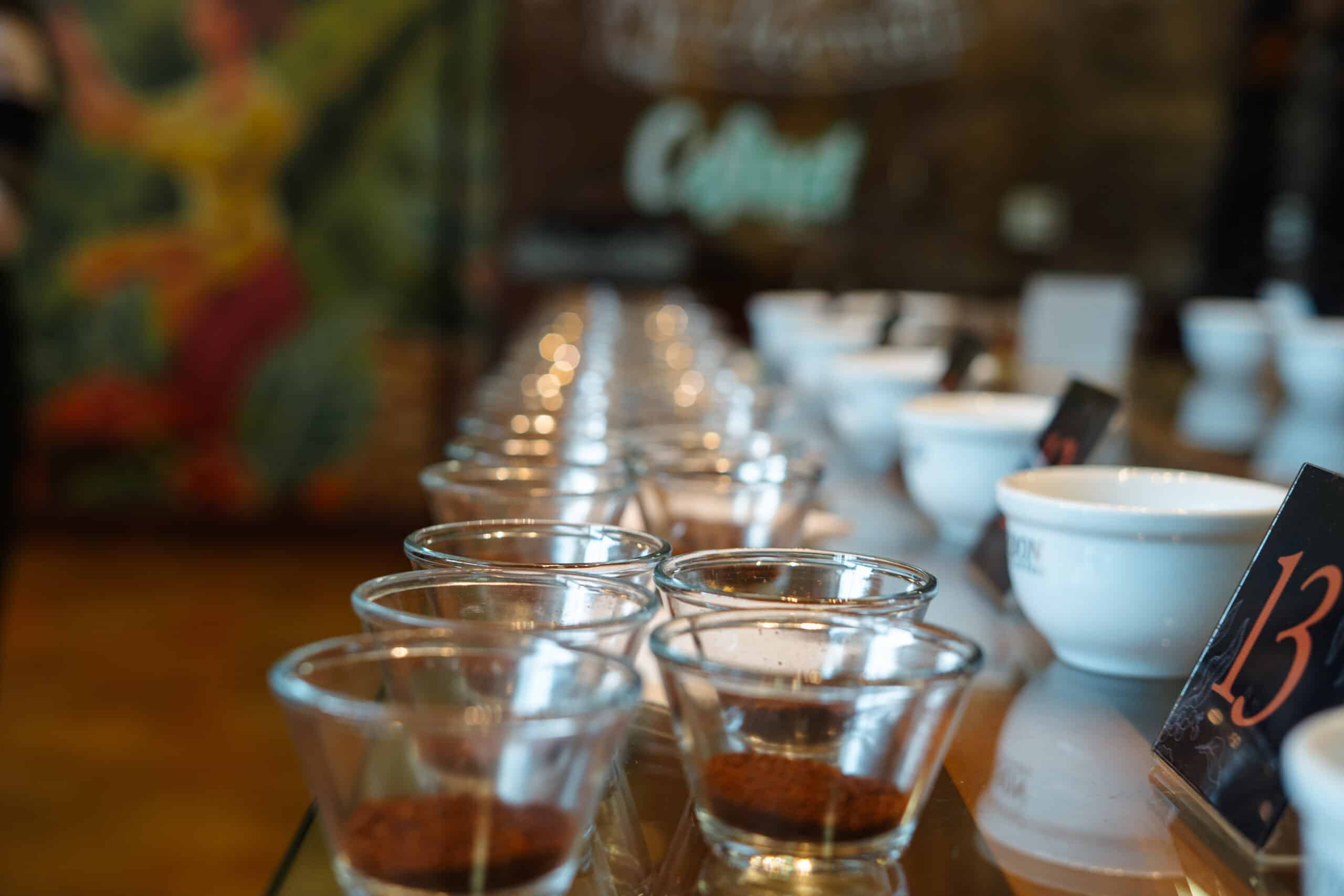
The protocol follows a precise ratio: 8.25 grams of ground coffee per 150 ml of water at 93°C. After the water is added, a crust of coffee particles forms on the surface while the grounds sink to the bottom.
After four minutes, the Q-Grader performs the crust break gently plunging the spoon three times into the surface while bringing the nose close to the cup to capture the first formally evaluated element: the wet aroma. The foam and floating residues are then skimmed from the surface using two spoons.
The professional then waits for the coffee to reach approximately 70°C which occurs between 10 and 15 minutes after the water is added before beginning the tasting. This temperature is the ideal point: hot enough to release aromatic compounds, but without impairing the evaluator’s sensory perception.
With a cupping spoon in hand and a spittoon nearby, the Q-Grader aspirates the coffee forcefully producing the characteristic sound of the cupping session. When aspirated, the coffee is atomized into fine particles that spread uniformly across the entire oral cavity, activating the palate evenly and projecting volatile aromatic compounds through the retronasal passage, where most of what we perceive as flavor is processed.
Moving from cup to cup, the professional rinses the spoon in a water vessel between each evaluation to avoid cross-contamination between lots. Simultaneously, they record their perceptions on a scoring sheet, describing attributes and assigning individual scores to each parameter.
For specialty coffees destined for the international market, the adopted protocol is that of the SCA, conducted by certified professionals known as Q-Graders. This methodology evaluates 11 sensory attributes, each scored on a scale from 0 to 10. The sum of the scores generates the coffee’s final grade and only lots that reach 80 points or more are recognized as specialty.
In the context of specialty coffees, the SCA protocol expands the analysis beyond the presence or absence of defects, evaluating the full sensory complexity of the lot:
Fragrance and Aroma : Olfactory perception of the dry coffee and after the addition of hot water.
Acidity : Sensation perceived on the sides of the tongue; can be bright and positive or aggressive and unbalanced.
Sweetness : Presence of natural sugars (sucrose, glucose, and fructose) developed during processing and roasting.
Bitterness : Impact of caffeine and other alkaloids; evaluated in relation to the overall balance of the cup.
Body : Viscosity and density perceived on the palate, resulting from dissolved solids during extraction.
Aftertaste : Persistence and quality of the flavor that remains in the mouth after swallowing.
Balance : Harmony among all evaluated attributes in the cup.
Clean Cup : Absence of any defect or off-note from the first sip to the finish.
Uniformity : Sensory consistency across the different cups of the same lot evaluated on the table.
Terroir : The complex set of characteristics linked to the origin: climate, soil, altitude, and humidity of the producing region, which imprint a unique identity on the coffee.
Overall : The Q-Grader’s global and subjective impression of the lot, based on their experience and technical calibration.
From the individual scoring of each attribute, the Q-Grader compiles the lot’s final grade. Coffees that reach 80 points or more on the SCA scale receive specialty recognition. Sensory evaluation is ultimately what determines the true profile of a coffee and it is the essential stage that ensures the buyer receives exactly what their market demands.