The post-harvest journey begins as soon as the producer receives the coffee from the field. Before performing any intervention on the bean, the team must subject the batch to a sorting and cleaning process. In this initial stage, workers remove impurities such as leaves, branches, dirt, and small stones. Thus, this sorting not only protects the machinery from potential damage but also prevents debris from interfering with the beverage’s sensory profile.
Right after cleaning the coffee, the producer faces one of the harvest’s most important decisions: which post-harvest method will they choose? Although there are different paths, our focus here will be to delve into the details and benefits of wet processing.
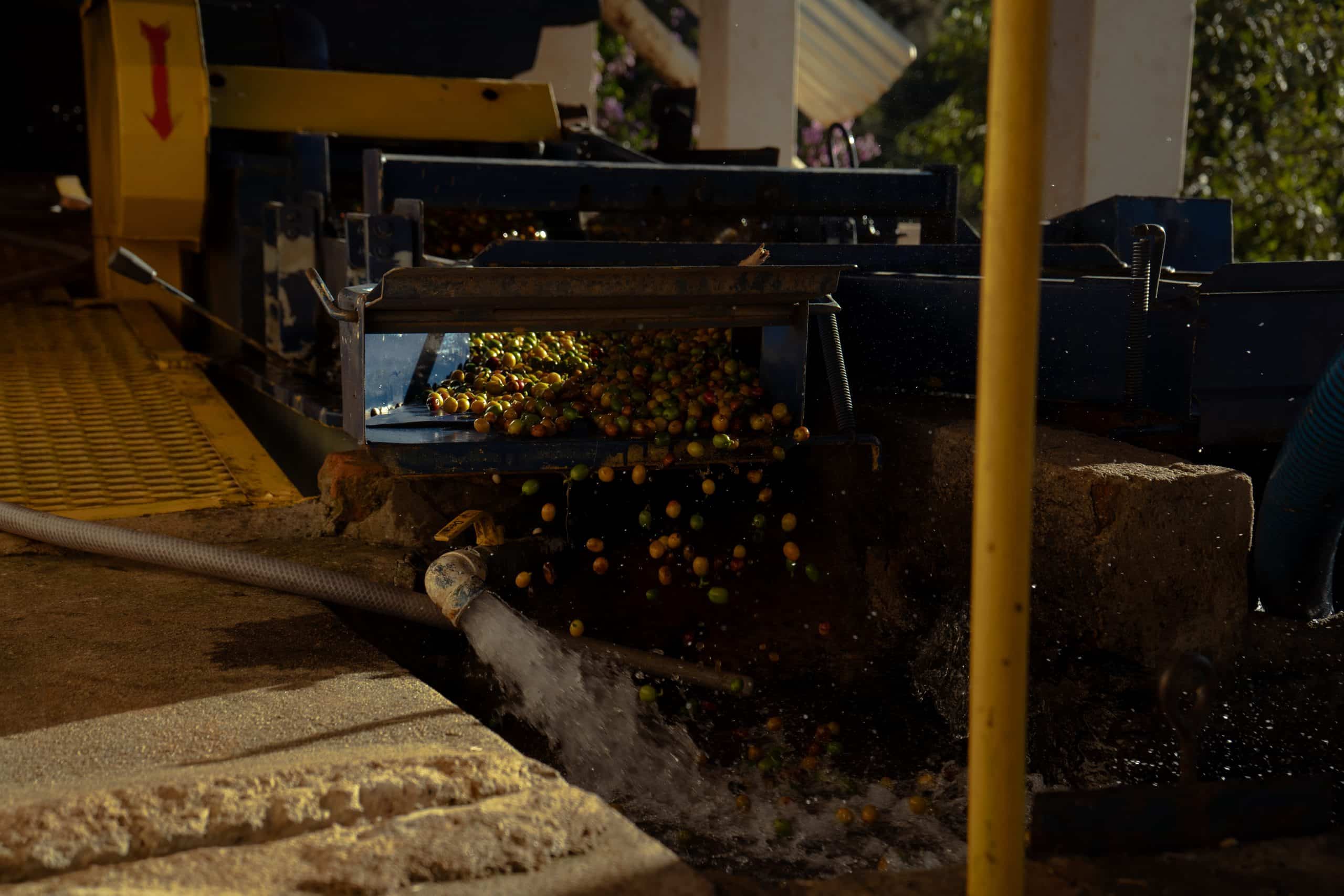
Primarily, in wet processing, water is used to wash and separate the cherries by density. In this process, the denser cherries (ripes and unripe cherries) sink and are directed to the pulping machine. Because unripe cherries have a more rigid structure, they are not pulped by the machine; they pass through intact, are subsequently separated, and sent directly to the drying patio. Meanwhile, the less dense cherries the famous floaters and raisins float on the surface of the water and also go straight to the drying patio.
The cherries directed to the machinery are pulped using mechanical pulpers that operate by friction. Currently, the market offers equipment for all producer profiles, ranging from simpler, manually operated machines to high-yield, fully automated systems.
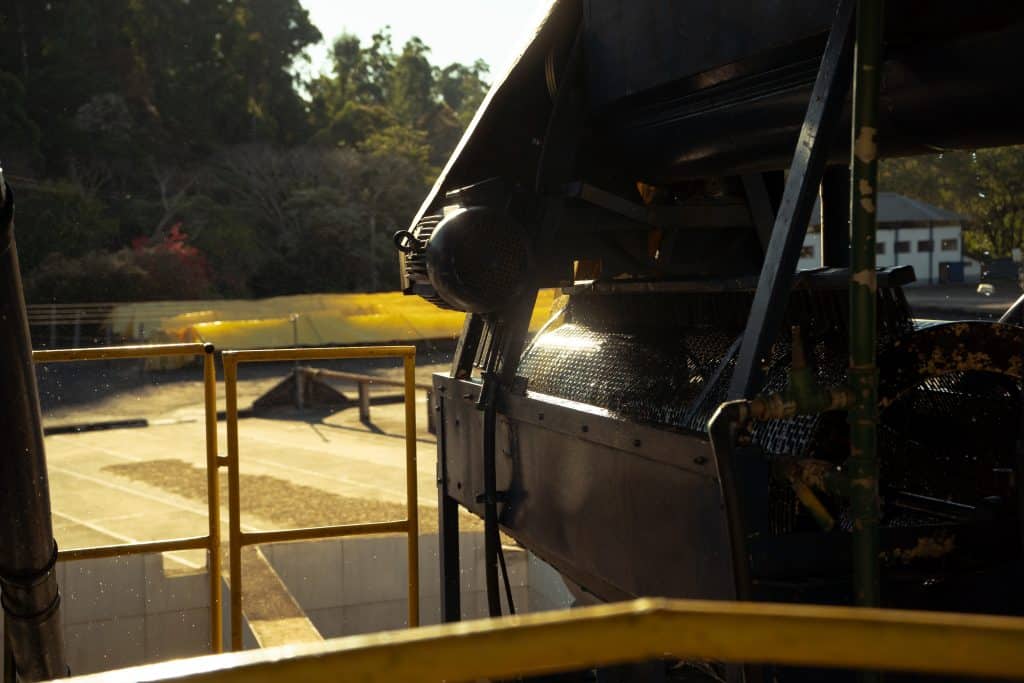
Subsequently, the producer can direct the coffee straight to the patio for drying. In this scenario, it originates the Honey coffees, which represent coffees dried along with their mucilage. Thus, this choice can generate four subtypes of coffee:
White Honey: The bean retains the least amount of mucilage (around 10% to 25%) and undergoes a quick sun drying. As a result, the producer obtains a very clean cup, with bright acidity and subtle sweetness, closely resembling the sensory profile of a washed coffee.
Yellow Honey: The bean retains about 25% to 50% of the mucilage, and the team turns it frequently during drying under moderate sun exposure. In the cup, it presents a medium body, balanced acidity, and a very pleasant honey-like sweetness, accompanied by mild fruity notes.
Red Honey: This process maintains a large part of the mucilage (50% to 75%) and requires slower, more careful drying, which the team generally performs on raised beds under shade. Sensorially, the coffee delivers a beverage with a syrupy body, high sweetness, and distinct notes of red and dark fruits.
Black Honey: The bean retains practically 100% of the mucilage. Being the most complex and time-consuming process, the producer dries it under cover or shade, applying minimal movement to preserve the coffee’s structure. Ultimately, this method yields an extremely full-bodied and sweet coffee, with complex, rich, and intense notes reminiscent of molasses, chocolate, and ripe fruits.
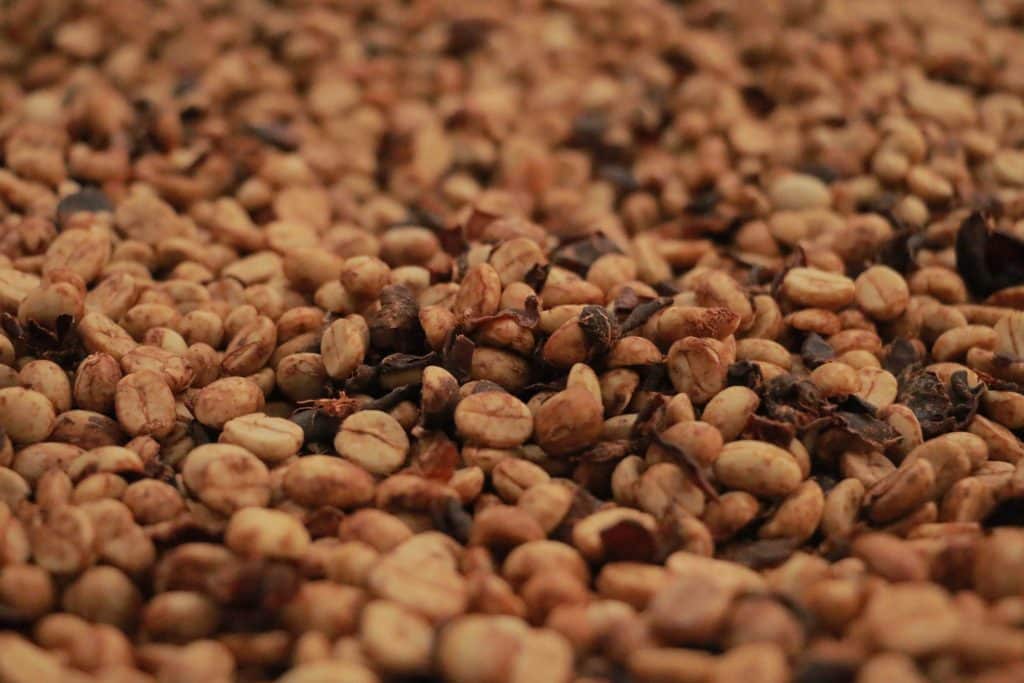
On the other hand, the coffee grower has an extra alternative: producing washed coffees. In this method, they completely remove the mucilage using a machine called a mechanical demucilager.
The advantage of this equipment lies in its precision, as it offers settings that allow for the gradual and controlled removal of this viscous layer. Thus, the machinery enables the producer to create fully or partially demucilaged coffees, exactly according to the sensory profile they wish to achieve.
In short, far beyond the logistical gains of optimizing drying and storage, the wet process provides the producer with a true sensory arsenal. By leveraging the ability to transition between the complexity of Honeys and the purity of washed coffees, the farm can meet the market’s most refined demands. In the end, more than merely executing a processing stage, mastering the wet process ensures honoring the terroir, maximizing the bean’s value, and elevating the beverage’s quality to its maximum potential in the cup.