In the specialty coffee market, consistency is paramount. Flawless quality begins long before the final product reaches the buyer. Our quality team acts preventively. We track the coffee from its origin to guarantee purity and sensory excellence.
Replicating this high standard on a commercial scale requires technical precision. Which internal processes allow Bourbon to guarantee the integrity of each lot before it enters the market?
The answer to this challenge begins directly at the origin. The process starts by collecting a perfectly representative sample at the farm. Using milled coffee, the producer extracts 30 grams from each bag or big bag. The producer maintains the same proportion across all packaging.
The producer mixes and homogenizes all collected samples. Then, they separate only the 300 grams required for the initial grading analysis.
At this stage, we receive the coffee from the farm as field-run green coffee. We clean the lot and check the moisture content, which must not exceed 12%. Next, we visually identify the processing method and perform the olfactory analysis.
The coffee must preserve its original aroma characteristics. The beans must not show signs of smoke or external odors.
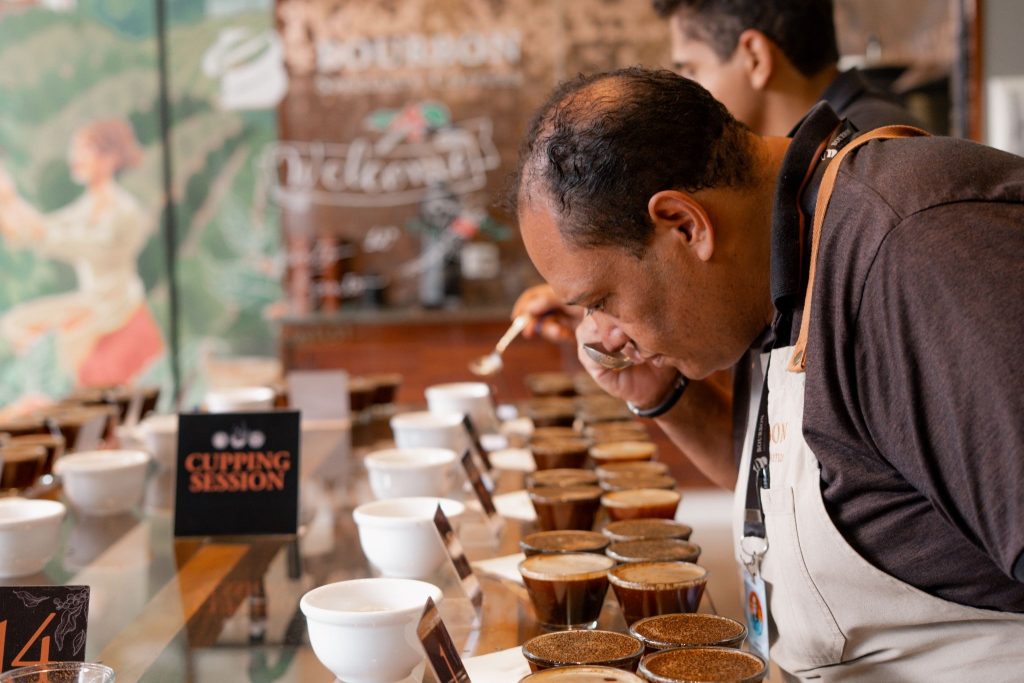
Physical analysis is essential, but the coffee reveals its true value in the cup. Therefore, we submit the lot to cupping right after cleaning. We roast and grind the coffee, separating ten cups for the sample. The preparation requires laboratory precision of 150 ml of water to 8.5 grams of coffee.
After four minutes, the grounds settle and create a crust on the cup. Breaking this crust reveals the most intense aromas and begins the tasting.
The grader evaluates three fundamental pillars: body, acidity, and sweetness. The sensory protocol includes seven additional attributes, such as flavor, balance, and uniformity. Mapping this sensory profile accurately is vital. This stage guarantees coffee standardization. Thus, we deliver the best experiences to our clients.
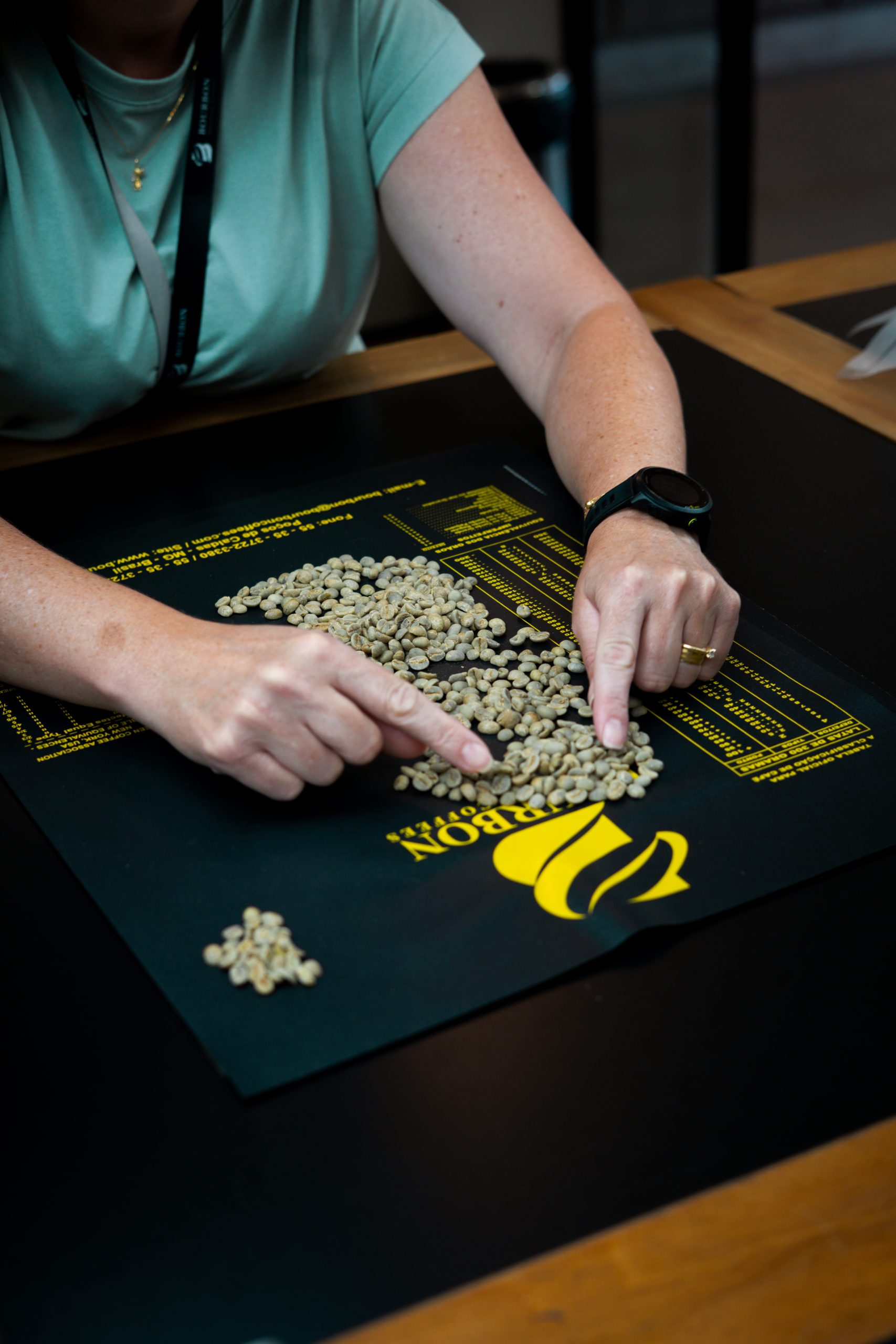
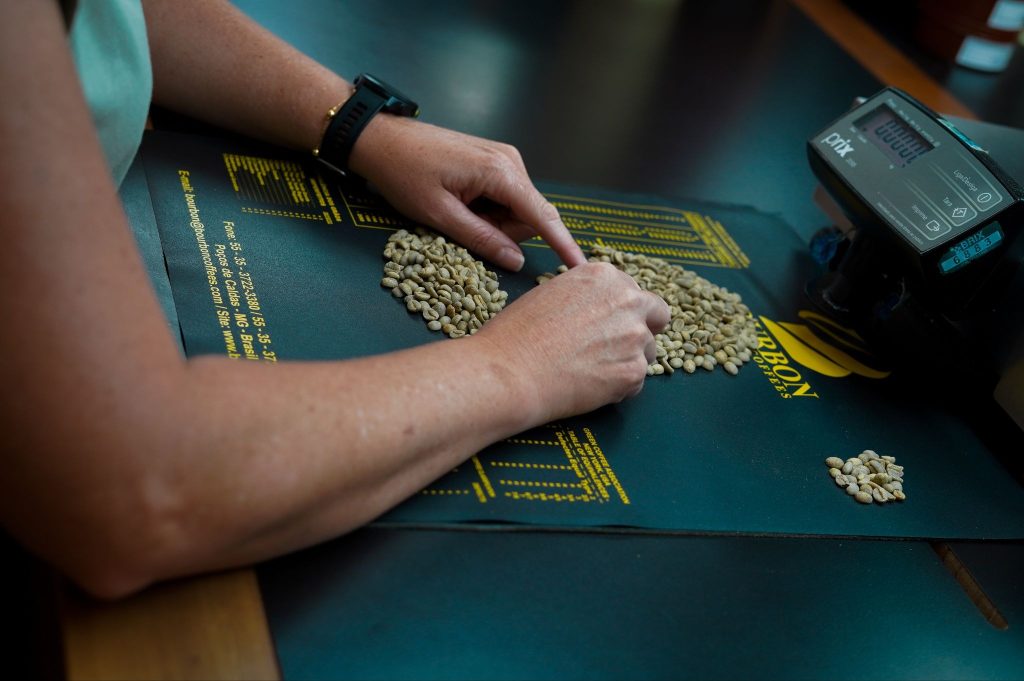
Coffee approved in the cupping proceeds to physical grading. During this phase, the specialist counts the bean defects. We apply SCA rules or the Brazilian Official Classification to quantify these defects.
The grader visually analyzes defects such as color, insect-damaged, and green beans. They also perform screening and bean size classification. This meticulous manual separation mirrors the future processing of the lot.
The specialist simulates the exact work of industrial machines on the bench. In the factory, vibrating screens, density tables, and electronic sorters replace manual labor.
We approve the lot quality only after this rigorous battery of evaluations. The approved coffee proceeds to the industrial machinery. This ensures the same excellence between the initial sample and the final shipment.
For the Bourbon team, the secret to consistency lies in technical calibration and transparency. According to Roberto Pereira, Quality Control grader, our delivery guarantee relies on meticulous sensory analysis.
“We evaluate multiple samples against strict standards to ensure a quality consensus,” the specialist explains. “This precision allows us to send a pre-approval sample to the client. It ensures we deliver the exact sensory profile they need.”