In the specialty coffee market, consistency and uniformity are essential. Even when the coffee comes from highly trusted producers, recognized for their quality, methods and farm management, the beans often arrive at the warehouse with impurities and uneven sizes. Re-milling is what corrects this.
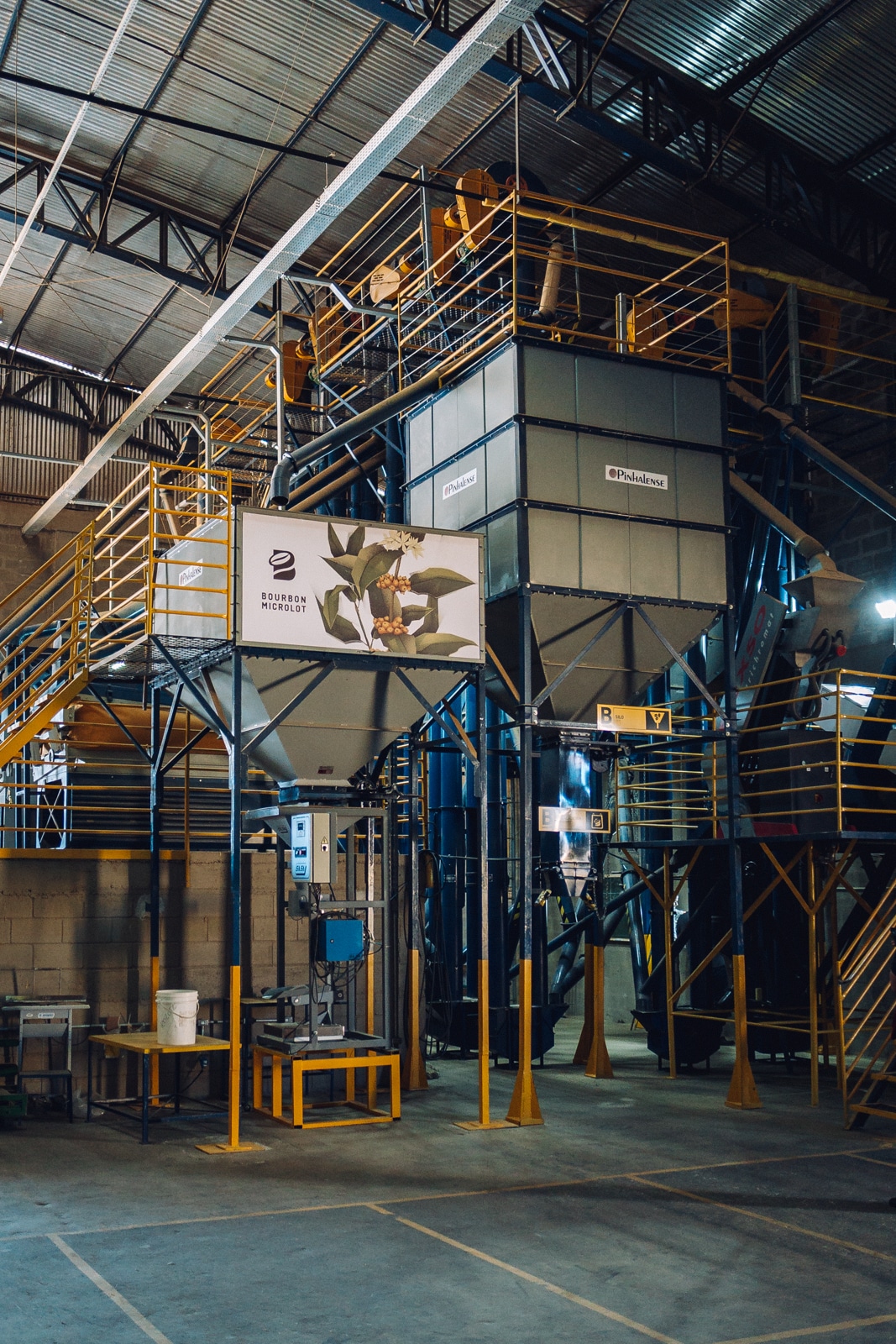
But how does this process ensure that? The answer lies in highly advanced machinery organized in a logical sequence: pre-cleaning, destoning, screening, gravity table separation and, finally, the electronic color sorter. Each machine performs a specific function, and together they deliver uniform, carefully selected beans that meet the premium standard the specialty coffee market demands.
In this article, we explain each step of coffee re-milling, starting with the industrial flow of cleaning and physical separation.
Pre-cleaner: The first line of defense against light and heavy debris
The lot’s journey starts at the receiving hopper. The beans are conveyed by a bucket elevator to the pre-cleaner, a unit equipped with a closed-circuit air system and vibrating wire mesh screens. During this initial stage, three processes occur simultaneously:
Pneumatic aspiration: A controlled airflow sweeps away light materials (dust, dry chaff, and loose husk fragments), routing them to a settling chamber or cyclone collector.
Mechanical screening: Two stacked screens filter out coarse debris. The upper screen catches twigs, larger soil clumps, and burlap fibers, while the lower screen sifts out fine dust and sand.
Magnetic plate: Before exiting the machine, the coffee passes over a high-strength magnet that captures nails, wire fragments, and other metal objects that could damage downstream equipment.
With the load free of loose and coarse debris, the beans move on to a more specific challenge: materials the same size as coffee beans but much denser.
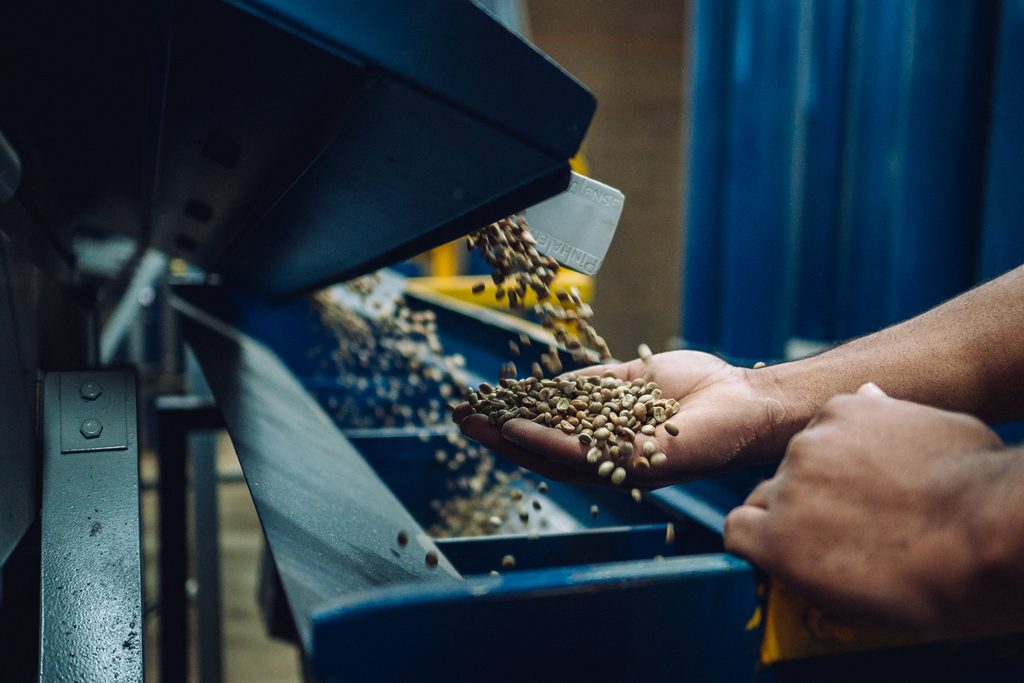
Even after pre-cleaning, small stones and dense soil particles collected during harvest remain mixed in with the lot. Because their dimensions closely mirror coffee beans, conventional screens cannot catch them. The destoner solves this challenge by pairing oscillatory vibration with a fluidized air bed:
The upward airflow suspends the lighter coffee beans, causing them to “float” and glide toward the discharge chute.
Heavier stones and soil clumps overcome the air resistance, settle at the bottom of the inclined deck, and are carried in the opposite direction by the plate’s continuous vibration to be discarded automatically.
With the lot clear of foreign contaminants, the warehouse shifts focus purely to the coffee itself, sorting the beans by physical traits.
Size Grader (Vibrating Screens): The foundation for an even roast
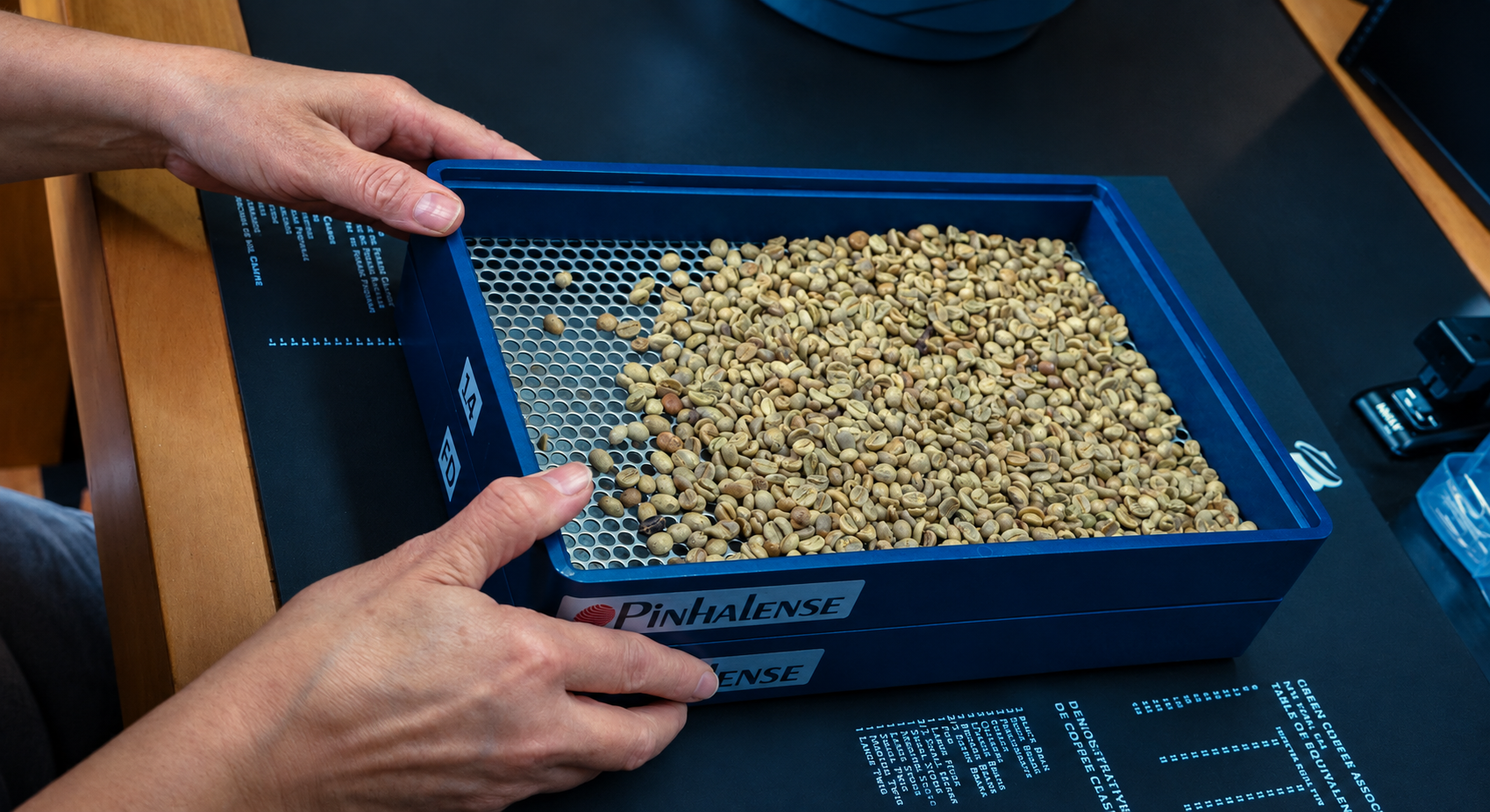
To roast coffee evenly, every bean inside the roasting drum must absorb heat at the same rate. If small and large beans are roasted together, smaller beans scorch before larger ones achieve proper core development. For this reason, the dry-milling line includes a vibrating rotary or flat-screen grader that sorts the lot by screen size:
The coffee slides across perforated metal sheets with standardized hole sizes measured in 64ths of an inch.
Larger flat beans remain on the upper screens (such as 16, 17, and 18+), while smaller fractions pass through. This step also naturally isolates peaberry beans where the cherry yields a single rounded seed—typically around screens 9 to 11.
With the beans sorted by caliber, the lot proceeds to an evaluation of each seed’s mass and structural integrity.
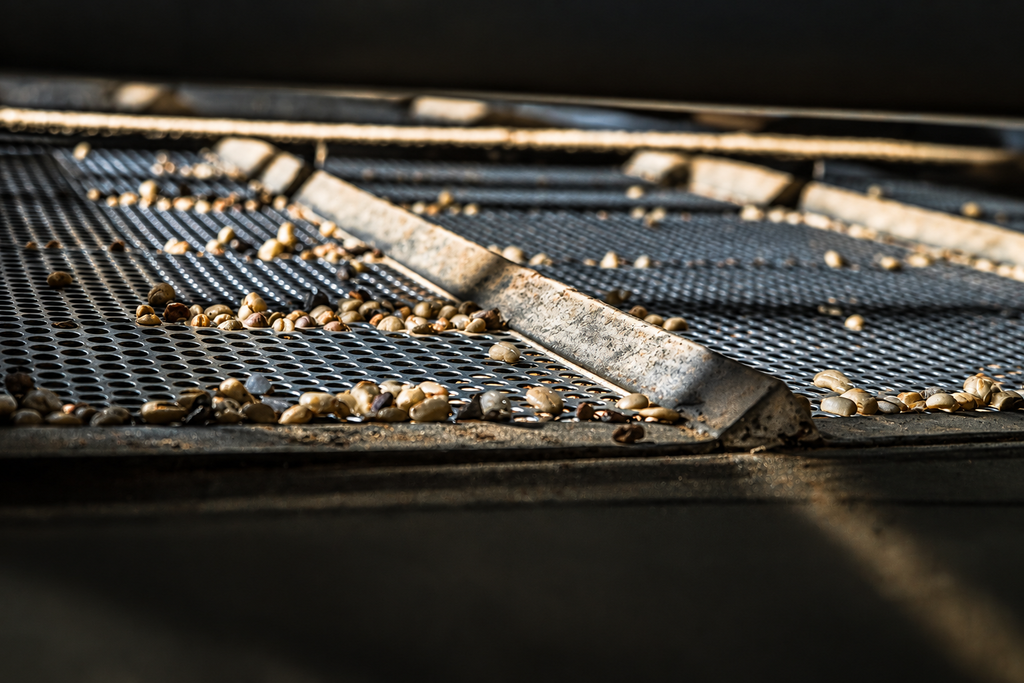
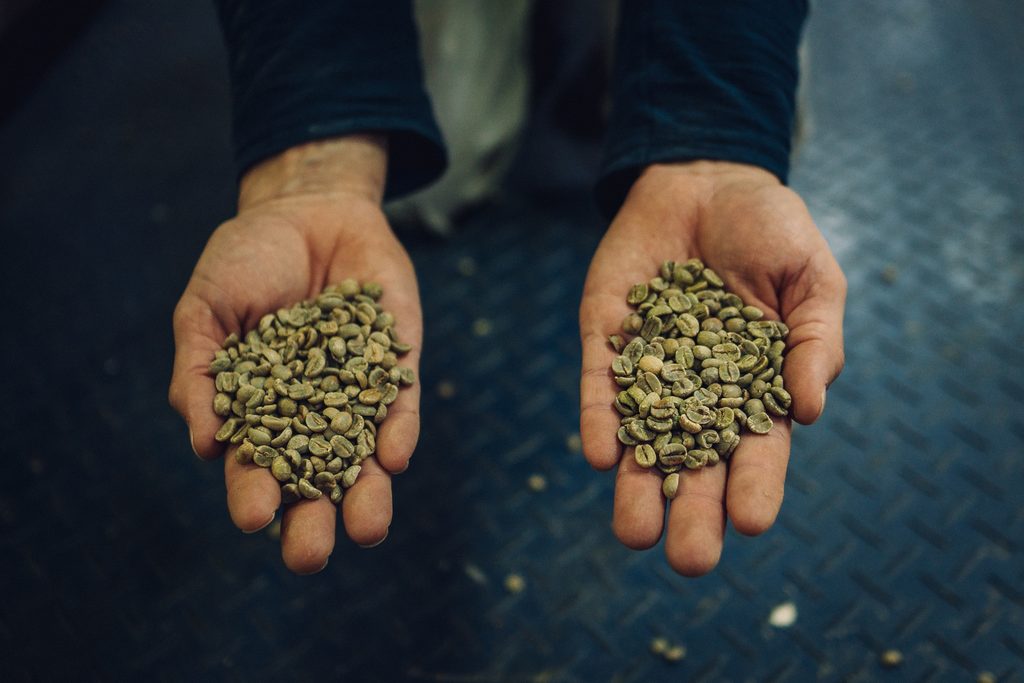
Two beans can share the exact same screen size yet differ entirely in internal mass. A well-nourished bean harvested at peak ripeness is dense; an underdeveloped, borer-damaged, or drought-affected bean is hollow, spongy, or defective. The gravity table utilizes an inclined wire-mesh deck, longitudinal vibration, and continuous columns of air:
Airflow lifts light, hollow, and “shell” beans (malformed, empty beans) along with loose parchment fragments, guiding them to the lower reject discharge.
Heavier, denser beans packed with richer aromatic compounds and cellular structure settle on the deck and are carried by vibration to the high end of the table, moving forward into the premium lot.
Following mechanical separation by weight, size, and density, only the most rigorous inspection remains: the microscopic removal of color defects.
Optical Color Sorter: Bean-by-bean finishing
The optical sorter represents the pinnacle of precision in coffee dry milling. Black, immature, or defectively fermented beans often match the size and density of healthy beans, slipping past previous stages unnoticed. The sorter operates through this process:
Coffee flows at high speed through individual chutes illuminated by high-precision LEDs.
High-resolution digital cameras, often equipped with infrared sensors and RGB color spectrums, scan each bean in fractions of a microsecond.
Upon detecting an off-color defect (dark spots, yellowish fermentation, or unripe greenish hues), an ultra-fast burst of compressed air ejects that individual bean into the reject chute
Following these stages, the coffee is packed into jute sacks or big bags, loaded onto trucks, and shipped overseas on a new journey toward the consumer’s cup. Dry milling guarantees that the quality crafted by the grower arrives completely intact at its final destination.