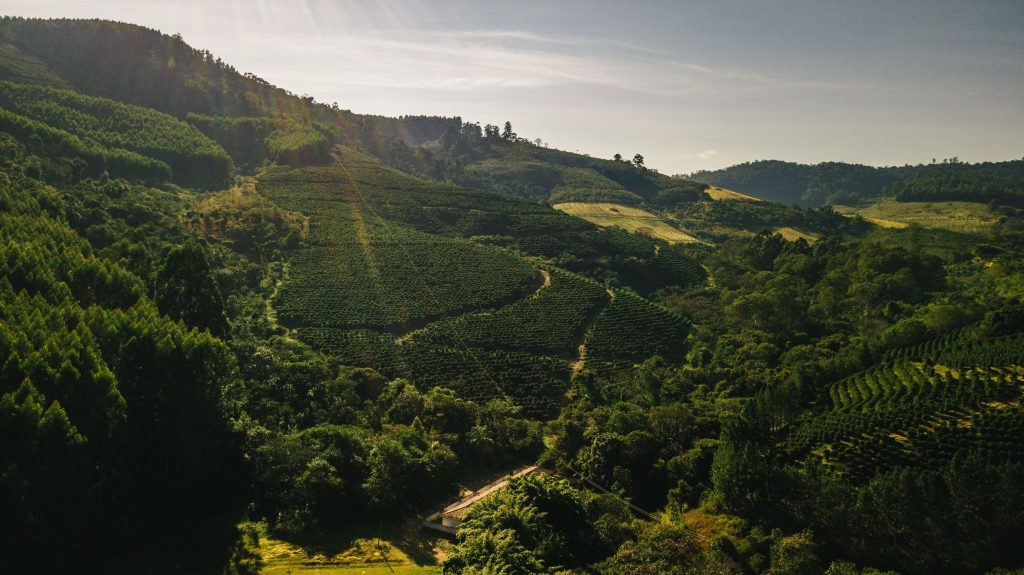
Minas Gerais is the main coffee-producing state in Brazil; however, to understand the consolidation of this hub, it is essential to revisit the initial context of national coffee farming.
The trajectory of Brazilian coffee farming began in 1727, in Belém (PA), with seedlings from French Guiana. Since then, the country has evolved to become the greatest coffee power on the planet, holding 29.8% of global production according to CONAB (National Supply Company). This hegemony is sustained by a singular terroir, where the combination of soil, climate, and altitude creates the ideal environment for the crop.
Currently, Brazil leads exports to demanding markets such as the United States and Europe, offering two main species:
Canephora (Conilon/Robusta): Notable for its resilience and adaptation to high temperatures, cultivated with excellence in lower altitude regions.
Arabica: Which requires mild microclimates and high altitudes to reach its maximum sensory complexity.
Although the plant entered the country through the North, it was in the Southeast that coffee found its true home. In the 19th century, the Paraíba Valley, a region situated between Rio de Janeiro and São Paulo, transformed into Brazil’s first great “green gold mine.” But how did coffee cross these borders and find its definitive terroir in Minas Gerais? The answer begins with a historic economic transition.
Minas Gerais, which had already been the economic epicenter of Brazil during the gold cycle (being the most populated province in the 18th century), saw its mineral wealth decline. In search of a new vocation, the state turned its eyes to this new “green gold.” The introduction of coffee farming in Minas Gerais occurred via the “Caminho Novo” (New Path) a route originally opened for the transport of minerals through which muleteers spread the first coffee seeds. Thanks to the strong commercial connection with Rio de Janeiro, the Matas de Minas (Zona da Mata) region became the state’s first major investment and production hub.
However, early logistics were a challenge. Transportation was done exclusively on the backs of mules, which ended up establishing a historical standardization that we use to this day: the 60 kg bag, the exact weight and technical limit to maintain the animal’s balance on the trails. Due to low efficiency and losses along the way, this model limited the sector’s growth. The first major expansion of Minas Gerais’ export scale only came with the arrival of the railways. Replacing animal transport with the railway network optimized the flow, reduced operational costs, and prepared the state for much larger demands.
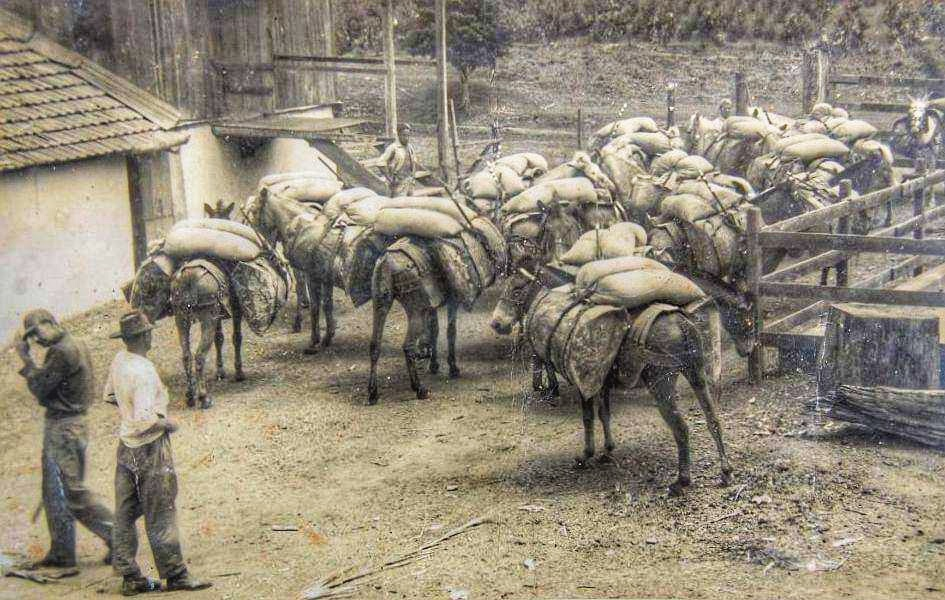
Font: https://ferdinandodesousa.com/2020/09/08/os-primeiros-tempos-do-cafe-na-zona-da-mata-mineira/
While the Zona da Mata developed, the rest of the national coffee agriculture faced its own migrations, with crops leaving the Paraíba Valley, passing through the West of São Paulo, and arriving in Paraná. But the great and definitive turning point for Minas Gerais occurred in the 1970s. After the tragic “Black Frost” of 1975, which decimated the coffee plantations in the South of the country, producers had to seek regions with lower climate risk.
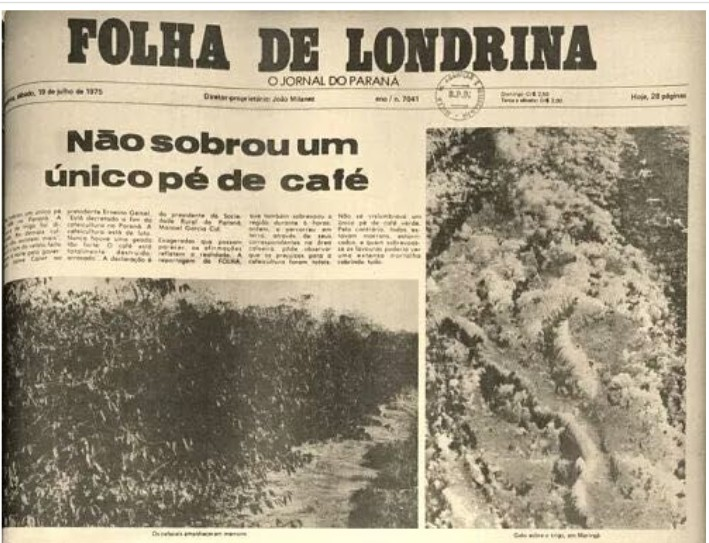
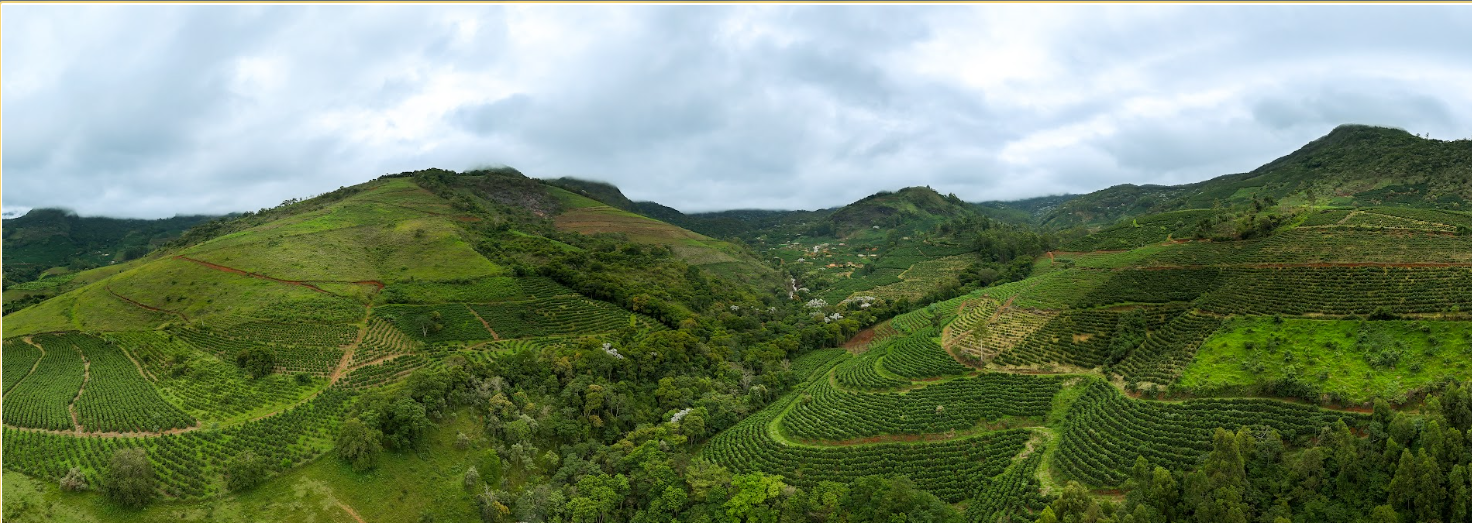
This is how coffee farming migrated en masse and consolidated itself in the South of Minas and the Cerrado Mineiro. Minas Gerais’ rapid transition to absolute protagonism was driven by its natural differentials: high altitudes, well-defined climate (rainy summers and dry winters), and a topography that favors both family farming and precision mechanization.
Today, this perfect union between geography and resilience makes Minas Gerais not only the largest producer of Arabica coffee in the country but also the main global exporting state of specialty coffees, recognized worldwide for its exceptional quality, constant innovation, and the richness of its sensory profiles.
But what exactly gives these beans the status of “specialty” and makes them so coveted internationally? The answer lies in the exact science of our terroir.
The excellence of Minas Gerais specialty coffee is deeply rooted in the mineral composition and vitality of its soil, which offers a banquet of essential nutrients for the metabolism of the Arabica coffee plant. In regions like the South of Minas, the predominance of soils of volcanic and granitic origin provides efficient natural drainage and porosity that favors deep root development. This unique geology allows the plant to absorb complex minerals, which translate into flavor and aroma precursors, such as chocolate and caramel notes elevating the sensory score of the beans to levels that meet the most demanding palates in the global market.
This fertile base works together with the high altitude of Minas Gerais, where the mild climate plays a vital role: it slows down the physiological cycle of the plant, allowing a prolonged and uniform maturation of the fruits. This additional development time is what ensures that the bean accumulates sugars and complex biochemical compounds, resulting in a beverage with balanced acidity and intense flavors. Thus, soil and altitude cease to be just geographical factors and become potentiating agents that ensure the sensory consistency and resilience that have consolidated Minas Gerais as the world’s largest exporter of specialty coffee.
Today, Minas Gerais has consolidated itself as the world’s largest exporter of specialty coffee. This title, however, is not the result of chance: it was earned over centuries of history, since Colonial Brazil, overcoming crises and accumulating knowledge. This article has condensed only a fraction of the rich trajectory of our famous ‘green gold’. To gauge its strength, the state produces about 50% of the country’s coffee, according to data from EMBRAPA (Brazilian Agricultural Research Corporation). And the state continues to evolve: the sector continuously invests in technological innovation and regenerative agriculture models, aligning itself with strict global environmental legislation, such as the EUDR (European Union Deforestation Regulation). It is respect for nature walking side by side with productivity. All these factors consolidate Minas Gerais as a coffee-cultural powerhouse, ensuring that the state continues to serve the world our purest excellence in every cup.